Table of Contents
ToggleGeorgia’s hot, humid summers and mild winters create a unique landscaping challenge. Standard temperate-zone plants struggle, and poorly planned layouts turn backyards into sweatboxes by July. The good news: with the right plants, strategic shade, and hardscaping choices, you can build an outdoor space that stays cool, looks sharp year-round, and requires less water than you’d think. This guide walks you through proven landscaping ideas tailored to Georgia’s warm climate, no fancy design degree required.
Key Takeaways
- Native Georgia plants like black-eyed Susans, viburnums, and oak trees thrive in heat and clay soil while requiring significantly less water and maintenance than standard temperate-zone plants.
- Strategic shade from deciduous trees planted on west and southwest sides can reduce surface temperature by 15–20°F and noticeably cut cooling costs.
- Georgia backyard landscaping ideas work best when you layer design elements: mature canopy trees overhead, understory shrubs in the middle, and groundcovers at the base to keep soil cool.
- Low-voltage LED landscape lighting systems cost $75–150 and extend usable outdoor hours while adding safety and ambiance without requiring an electrician.
- Hardscaping elements like stone pathways, raised beds, and permeable pavers improve drainage in clay-heavy soil and maintain year-round appeal even when plants are stressed.
- A covered patio or pergola-shaded outdoor living space is essential in Georgia heat, with at least 12×12 feet needed for comfortable dining and lounging.
Embrace Native Plants and Heat-Tolerant Shrubs
The secret to a low-water Georgia landscape starts with native plants. Black-eyed Susans, coreopsis, purple coneflower, and salvias thrive in heat and don’t need constant babying. Southern magnolias, red maples, and sweetbay add structure without wilting in July. For shrubs, try viburnums, inkberry hollies, and nandina, they handle clay soil and scorching afternoons.
When you plant natives, you’re working with Georgia’s climate instead of against it. These plants have adapted roots that dig deep for moisture and foliage that tolerates intense sun. A mix of native groundcovers like creeping phlox or sedum reduces mowing and fills gaps between larger plantings.
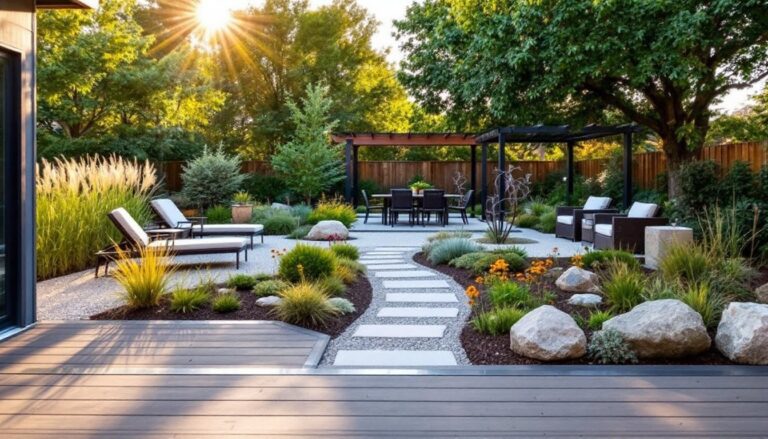
Start with a soil test. Most Georgia yards have acidic, clay-heavy soil. Adding compost and adjusting pH takes work upfront but saves years of struggling with yellowing leaves. Space plants according to their mature size, too-close plantings create disease and look cramped in three years. Crushed granite landscaping pairs beautifully with native plantings, offering a clean, low-maintenance finish that complements natural foliage.
Create Shade With Strategic Tree Placement
A mature oak or hickory isn’t just pretty, it’s air conditioning. Shade reduces surface temperature by 15–20°F and cuts cooling costs noticeably. Plant deciduous trees (ones that lose leaves in winter) on the west and southwest sides to block afternoon sun in summer while letting warmth through in cooler months.
Southern red oak, white oak, and sycamore are tough, long-lived choices. Avoid fast-growing softwoods like pines unless you want debris management headaches. Space large trees 20–40 feet apart, depending on mature width: too close and they’ll compete for water and nutrients.
If you don’t have mature trees, plant now, they take 10–15 years to cast real shade. Meanwhile, use pergolas with climbing vines or shade structures to bridge the gap. Superior landscaping emphasizes layering: canopy trees overhead, understory shrubs below, and groundcovers filling the base. This creates depth and keeps roots cooler by shading soil.
Design a Low-Maintenance Water Feature or Pond
Water cools a space and adds visual interest without constant fussing. A small recirculating pond or fountain uses far less water than you’d think, the same water cycles continuously. Ponds also attract beneficial insects and birds, reducing pest pressure naturally.
For a DIY approach, start with a preformed pond shell (fiberglass or rigid plastic, roughly 3–4 feet across and 18–24 inches deep) or a rubber liner. Position it in partial shade to reduce algae growth and evaporation. Add a small pump and filter: electricity runs $50–200 depending on size, and power usage is minimal. Don’t stock goldfish unless you’re committed to regular maintenance, they require oversight in Georgia heat.
A simpler option: a stone-lined water basin or birdbath. Refill it every few days, and you’ve got a cooling element that costs almost nothing. Both styles soften hard landscaping and create focal points that draw the eye, breaking up large open yards.
Build Outdoor Living Spaces With Patios and Decks
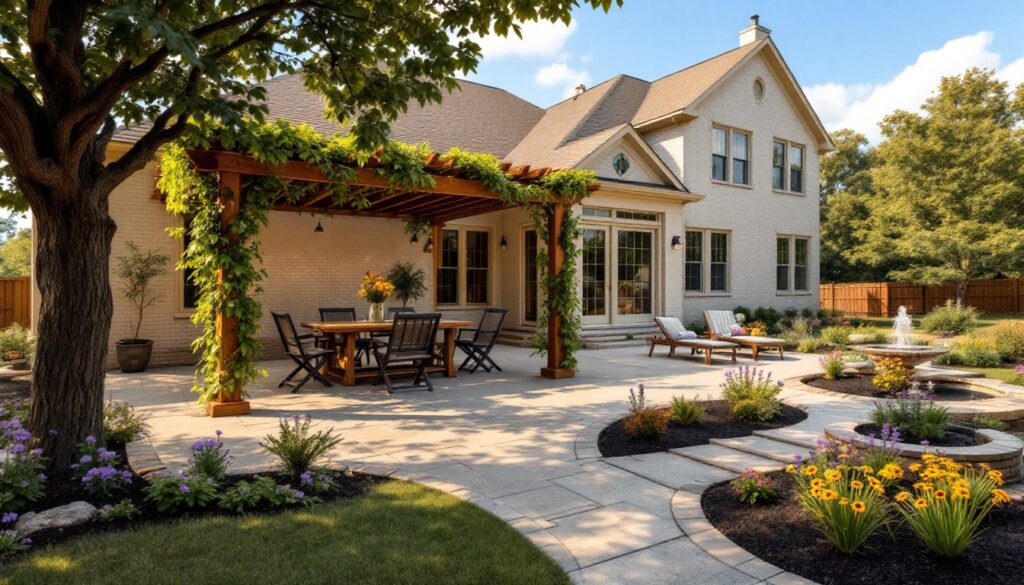
Georgia heat demands shaded seating. A covered patio or pergola-shaded deck becomes the real backyard living room, not a scorched afterthought. Patios work well in most yards: decks suit sloped terrain and areas where drainage is tricky.
For materials, poured concrete is the budget choice ($3–8 per square foot, depending on finishes and site access). Brick or permeable pavers cost more but age beautifully and manage water better in clay-heavy soil. Modern backyard landscaping often combines hard and soft elements, a large patio anchoring seating, with planting beds around edges adding greenery and shade.
Size matters: aim for at least 12×12 feet so a dining table and lounge chairs fit comfortably. If you’re building a deck, use pressure-treated lumber rated for ground contact (the foundation posts take the most rot risk). Georgia’s humidity means fasteners rust and wood checks unless you choose materials wisely. Add a shade structure overhead, lattice, a permanent pergola, or a cantilever awning, or you’re back to dodging sun at 2 p.m.
Incorporate Hardscaping Elements for Year-Round Appeal
Hardscaping, stone, gravel, pavers, edging, keeps a yard looking intentional even when plants are dormant or stressed by drought. Bricks for landscaping aren’t just for borders: they’re versatile for pathways, raised beds, and retaining walls. Stacked stone gives texture and height, breaking visual monotony.
Forms of hardscape to consider:
• Gravel or mulch pathways between planting zones create structure and reduce mowing edges.
• Raised beds improve drainage in clay soil and let you control soil composition.
• Stone edging separates lawn from planting beds, keeping mower lines clean and reducing hand-trimming.
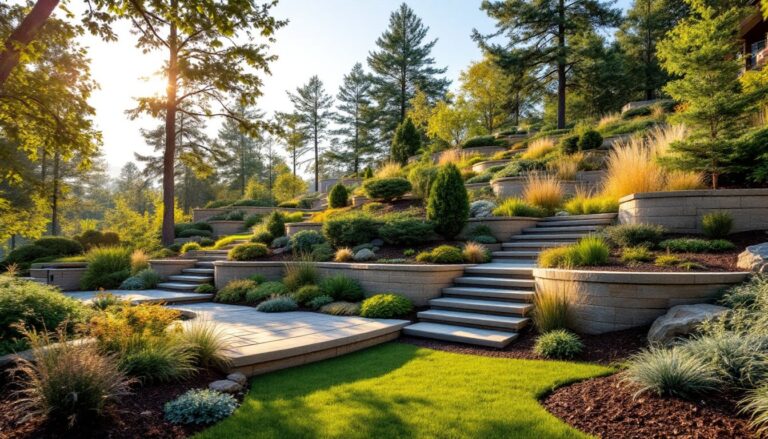
• Retaining walls handle slopes and create flat terraces for seating or plantings.
Choose materials that echo local stone or your home’s exterior. Georgia granite or slate feels native and weathers beautifully over time. Avoid light-colored gravel in full sun, it reflects heat and looks harsh. Dark mulch or dark granite stays cooler visually and complements green plantings.
Install Landscape Lighting for Function and Ambiance
Good lighting extends your backyard hours after sunset and adds safety to pathways. Low-voltage LED systems are cheap to run and easy to install without hiring an electrician. A basic kit (power supply, 100 feet of wire, and 8–10 fixtures) costs $75–150 and wires into a standard outdoor outlet.
Layering light creates depth: uplighting on trees adds drama, path lights guide feet safely, and overhead string lights or spotlights define seating areas. Warm color temperature (2700K) feels inviting: cooler tones (4000K+) read harsh and institutional.
For installation, lay wire along the ground or bury it 2–3 inches deep if foot traffic is heavy. Place fixtures 6–8 feet apart on pathways: space accent lights further apart around trees. Timer controls let lights come on automatically at dusk, and many modern systems pair with phone apps for scheduling. String lights and lanterns add festive appeal without the installation fuss, though they need cleaning in Georgia’s dusty summers.
Conclusion
Building a Georgia backyard that’s functional, cool, and attractive doesn’t happen by accident. Start with native plants and strategic shade, add a water feature or outdoor living space, layer in hardscaping, and finish with lighting. Each element builds on the others, shade keeps plantings cool, hardscaping reduces maintenance, and good bones make it all look polished. Take time with soil prep and spacing: rushing those steps costs years of frustration. Your Georgia backyard can be the oasis where you actually want to spend time, even in July.