Table of Contents
ToggleYour front yard is your home’s first impression, and stone landscaping delivers impact without the fuss of constant maintenance. Whether you’re working with a small plot or a sprawling lawn, stone elements create structure, visual interest, and curb appeal that lasts for years. From gravel beds to paver pathways, stone gives you flexibility to build a landscape that matches your style and budget. The best part? Most stone projects are achievable for homeowners willing to put in the prep work. Let’s explore practical stone landscaping ideas that’ll transform your front yard into something you’re genuinely proud to show off.
Key Takeaways
- Stone landscaping ideas for front yards deliver durability and low maintenance, reducing the need for watering, mowing, and seasonal replanting compared to traditional turf or perennials.
- River rock and pea gravel beds require proper preparation with landscape fabric and edging to prevent weeds and migration, with topping needed every 1–2 years depending on traffic.
- Pathways made from stepping stones or flagstone spaced 4–6 inches apart guide movement and create visual flow, while solar lighting adds safety and evening ambiance without wiring.
- Permeable pavers for driveways reduce water runoff and maintenance while costing $8–15 per square foot installed, but require a solid base of compacted soil, gravel, and polymeric sand.
- A cohesive front yard landscape uses 2–3 material types in neutral or complementary colors, with generous proportions that feel intentional rather than cluttered or fussy.
- Annual maintenance—raking gravel, sweeping pavers, pressure washing driveways under 3000 PSI, and removing organic debris—keeps stone landscapes looking polished and prevents moss and weed growth.
Why Stone Landscaping Works for Front Yards
Stone is the workhorse of outdoor design. It’s durable, weather-resistant, and requires minimal upkeep compared to turf or perennials. A well-planned stone landscape cuts down on watering, mowing, and seasonal replanting, huge wins if you’re short on time or trying to conserve water.
Stone also gives you visual permanence. While plants change with seasons, stone features stay consistent year-round, anchoring your landscape design. This consistency creates a polished, intentional look that reads as well-maintained, even when you’re not out there every weekend.
From a practical standpoint, stone handles foot traffic, drainage issues, and coastal salt spray better than most alternatives. If your front yard slopes, gets heavy shade, or suffers poor soil, stone hardscaping often solves problems where traditional landscaping struggles. When paired with landscaping ideas for front yards, stone creates the backbone that lets other design elements shine.
Gravel and Mulch Alternatives
River Rock and Pea Gravel Beds
Gravel beds are the entry point for most DIYers tackling stone landscaping. River rock and pea gravel are the two workhorses here. River rock is larger (roughly 1–2 inches), smoother, and lasts longer but costs more and shifts underfoot. Pea gravel is smaller (about 0.5 inches), comfortable to walk on, and cheaper, but it compacts over time and needs occasional raking and topping.
The key to any gravel bed is preparation. Dig out the area to a depth of 2–3 inches, remove perennial weeds and their roots, and lay down a landscape fabric or weed barrier to prevent weeds from pushing through. Secure the fabric with landscape staples every 12 inches.
Calculate your volume before ordering: length × width × depth (in feet), divided by 27 equals cubic yards. Most suppliers can deliver gravel, but confirm truck access to your yard first.
Once in place, gravel beds frame planting areas beautifully and provide excellent drainage. You can define edges with crushed granite landscaping borders or low metal edging to keep gravel from migrating into the lawn. Plan to refresh or top-dress gravel beds every 1–2 years, depending on foot traffic and weather.
Stone Pathway and Edging Designs
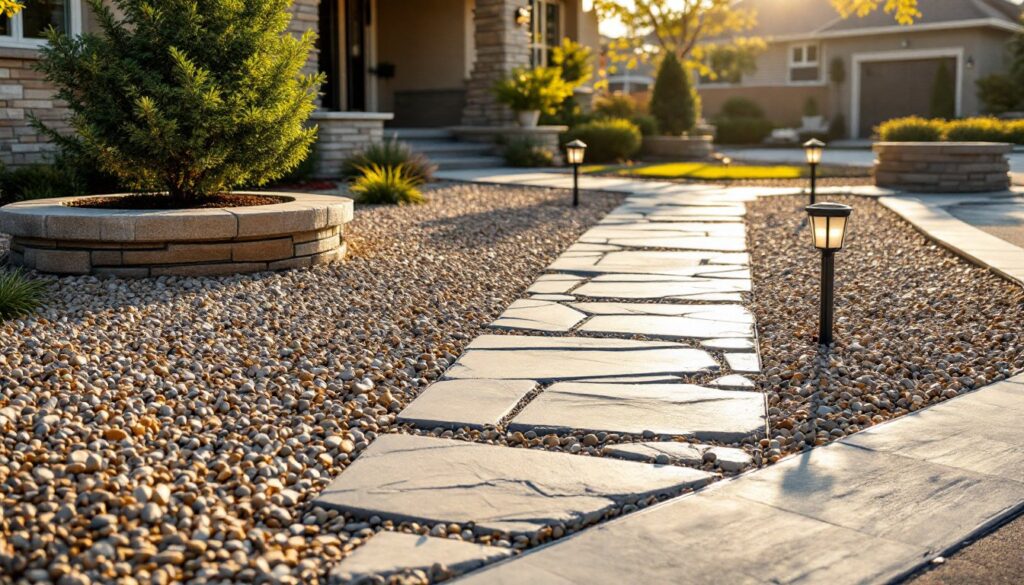
Pathways guide movement and create visual flow. A simple gravel pathway bordered by stone edging transforms an empty front yard into a destination. Run a straight path from street to door, or create curves that feel more organic.
For edging, metal landscape borders (steel or aluminum) are affordable and clean-lined, while plastic edging is cheaper but tends to degrade in UV and looks flimsy after a couple of seasons. Stone edging, thicker pieces of slate, granite, or composite pavers, costs more upfront but lasts indefinitely and looks intentional.
If you want something more substantial than gravel, stepping stones work well. Use large flagstone or concrete pavers (12×24 inches is a comfortable stride) spaced 4–6 inches apart through a gravel bed. Set them on a 2-inch base of compacted sand, tapping each stone level with a rubber mallet.
For a polished look, consider low-profile landscape lighting along pathways. Solar pathway lights are affordable and require no wiring, just push them into gravel or soil. They add safety and visual drama at dusk without the hardwire hassle. Paint your house numbers on a stone marker at the pathway entrance: it’s a small detail that feels deliberate and helps visitors find you.
Hardscape Features With Pavers and Flagstone
Driveways, Borders, and Accent Walls
Concrete pavers and flagstone are the heavy hitters for driveways, borders, and statement features. Pavers come in dozens of colors, textures, and sizes, and they’re modular, you can pull one up to repair or reconfigure without tearing up the whole surface. Flagstone is more rustic and organic-looking, with irregular edges that feel handcrafted.
Driveways are high-traffic areas, so use permeable pavers if local codes allow. They let water drain through rather than pooling on the surface, reducing runoff and maintenance. Expect to spend $8–15 per square foot for quality permeable pavers installed (pricing varies by region and material grade).
Before laying pavers, you’ll need a solid base. Compact native soil, add 4–6 inches of gravel base, then 1–2 inches of polymeric sand. Lay pavers with a mallet and level as you go. Use polymeric sand (not regular sand) in joints, it hardens when wet and resists weeds far better. This is the step most DIYers rush, and it’s the difference between a driveway that stays flat and one that settles unevenly.
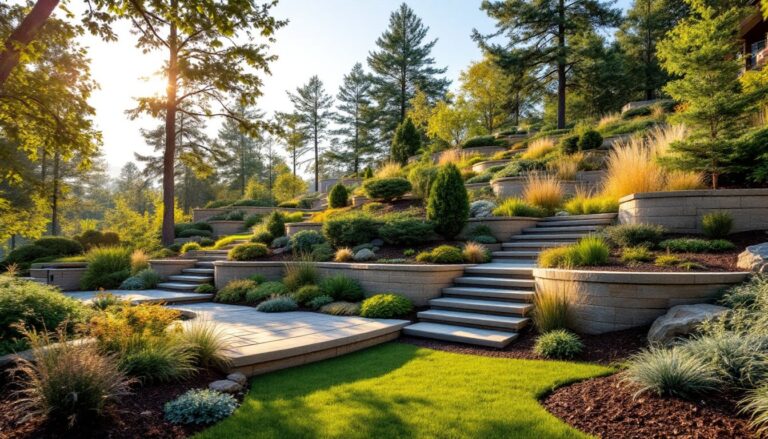
For accent walls or raised beds, stacked stone veneer or retaining wall blocks add vertical drama. These are best left to professionals if load-bearing is involved, but for cosmetic facades on low structures, handy folks can manage it with proper adhesive and leveling. Professional landscaping service can advise if a wall needs engineering.
Bricks for landscaping also work beautifully as borders or edging around planting beds, creating defined zones without the cost of full paver patios.
Putting It All Together: Design Tips and Maintenance
A cohesive stone landscape balances color, texture, and proportion. Stick to 2–3 material types (e.g., gravel, flagstone pathway, and paver border) rather than seven different stones that look chaotic. Neutral grays and tans are timeless: warm tones (reds, buffs, browns) suit traditional homes: cool blacks and charcoals look contemporary.
Proportion matters: don’t scatter tiny pebbles on a large lawn, use generous zones. One large swath of river rock with planted islands feels intentional: spotty gravel patches look unfinished.
For small front yard landscaping, less is more. A single defined gravel bed with a pathway and a specimen shrub is sophisticated. Cramming multiple materials into a tiny space reads as fussy.
Maintenance is straightforward. Rake gravel beds annually to dislodge debris and level compaction. Sweep pavers, and use a pressure washer annually on driveways (keep it under 3000 PSI to avoid damage). Inspect polymeric joints every 2–3 years: replace where weeds break through. Remove leaves and organic debris promptly, they trap moisture and encourage moss and mold, especially in shade.
If weeds appear between pavers, spray with vinegar-based herbicide or hand-pull young weeds before they set roots. Boiling water is free and effective on isolated weeds in gravel. Avoid chemical weed killers in high-traffic areas where runoff affects nearby plants or water.
Stone landscapes age gracefully. Weathering, slight settling, and moss in shade are character marks, not failures. As your design matures, you can add or adjust elements without replacing the foundation, that’s the real power of stone landscaping.