Table of Contents
ToggleYour front yard is the first thing people notice about your home, and it doesn’t need a landscape architect or deep pockets to look great. Simple front yard landscaping ideas can transform that tired patch of grass into an inviting entrance that adds real value to your property. Whether you’re working with a modest plot or limited budget, strategic planting, thoughtful mulch application, and smart hardscape choices deliver impact. This guide focuses on practical, doable projects that build curb appeal without unnecessary complexity or expense. Get ready to dig in and make your home the neighborhood standout.
Key Takeaways
- Simple front yard landscaping ideas start with clearing dead plants, weeds, and debris, then loosening soil with compost to create a clean foundation for planting.
- Layering plants by height—tall in back, shorter in front—combined with low-maintenance species suited to your climate creates depth and visual interest without excessive upkeep.
- Mulch is essential for easy landscaping: a 2- to 3-inch layer suppresses weeds, retains moisture, and frames planted beds while maintaining a polished appearance.
- Define your front yard with hardscape elements like mulch pathways, gravel strips, or brick borders that ground the landscape and cost significantly less than paved alternatives.
- Adding a single focal point such as a specimen plant, decorative rock, or landscape lighting ($30–$200) anchors the composition and elevates curb appeal dramatically.
- Container plantings on either side of your entry door with seasonal changes keep the entrance inviting and current with minimal effort or expense.
Start With a Clean Foundation
Before you plant a single flower or lay down mulch, clear away what’s already there. Overgrown bushes, bare patches, dead turf, and general clutter hide potential and make even a well-designed space feel neglected.
Start by removing dead plants, fallen branches, and debris. If the lawn is patchy or weedy, scalp it short with the mower set to the lowest setting, this removes old growth and lets you see what you’re working with. Pressure wash the driveway and walkways to reveal clean surfaces: this alone transforms the look for almost no cost. Pull weeds by hand or use a hoe around the foundation and edges.
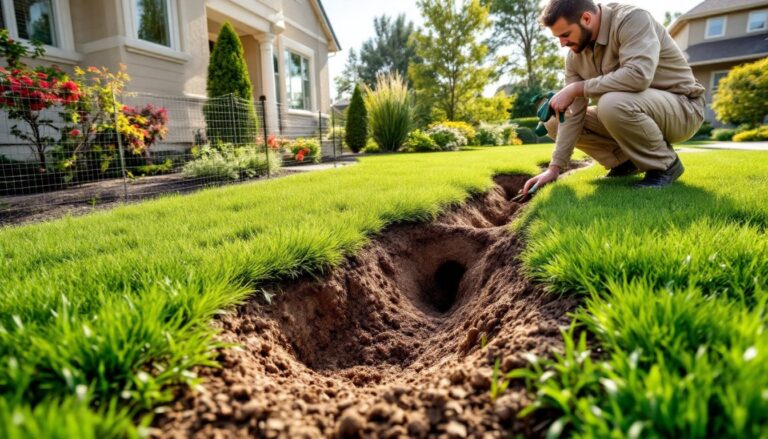
Next, assess your soil. Compact, lifeless-looking dirt won’t support healthy plants. Loosen the top 3 to 4 inches with a shovel or garden fork and break up clumps. If the soil drains poorly (stays soggy after rain) or is heavily clay, you’ll want to amend it with compost before planting. A 2-inch layer of quality compost worked into the top few inches of soil costs roughly $30–$60 for a small front yard and pays dividends for plant health.
Once the area is clear and loose, measure your front yard bed dimensions, width and depth. This simple step prevents mistakes when buying plants or mulch. You now have a true blank canvas.
Add Layers With Plants and Mulch
Layering is what separates a tidy landscape from a haphazard one. The technique, tall plants in back, shorter ones in front, creates depth and ensures every plant gets adequate light and room to breathe.
Choose Low-Maintenance Plants for Your Climate
The biggest landscaping mistake is planting something beautiful that your climate doesn’t support. It dies, looks worse than nothing, and wastes money. Instead, choose plants proven to thrive in your USDA hardiness zone.
For most temperate regions, reliable front-yard performers include evergreen shrubs (boxwood, arborvitae, juniper) that hold color year-round and require minimal pruning. Ornamental grasses (maiden grass, blue fescue) add texture and movement with almost zero maintenance. Flowering perennials (coreopsis, black-eyed Susan, daylily) bloom reliably, attract pollinators, and spread over time, filling gaps affordably.
Consult a local nursery or your state’s cooperative extension office for a curated list of plants suited to your area. Resist the urge to buy every beautiful specimen in the center of the garden center, buy 3 to 5 species and use multiples of each. Repetition creates visual rhythm: random mixes feel chaotic. Space shrubs so they won’t crowd each other at mature size: the gap looks sparse at first, but patience pays off.
Water newly planted items consistently for the first 4 to 6 weeks. Most established plants need only 1 inch of water per week from rain or irrigation. Overwatering kills more plants than drought, especially in heavy clay soil.
Use Mulch to Define Beds and Retain Moisture
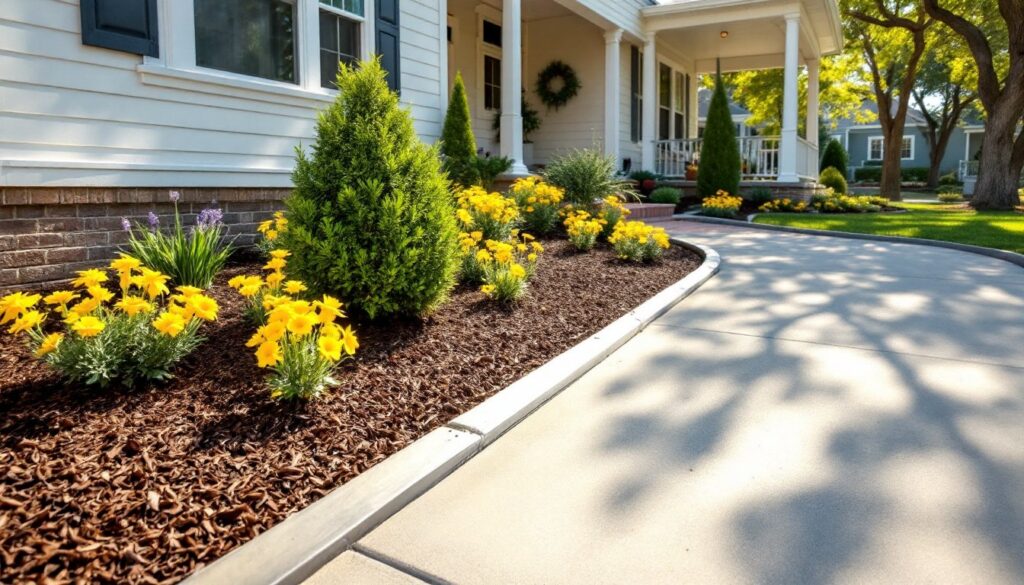
Mulch is the MVP of easy landscaping. It suppresses weeds, retains soil moisture, moderates soil temperature, and visually frames your plants. Spread a 2- to 3-inch layer of organic mulch, wood chips, shredded hardwood, or pine straw, in beds around plants. This depth is thick enough to work but won’t smother stems or compact over time.
For small front yards, layering with mulch and simple perennials is what makes spaces feel intentional and complete. Landscaping on a Budget strategies often hinge on this: multiply inexpensive plants, add mulch, and let them mature. Avoid dyed mulches unless you want to reapply them yearly: natural wood chips blend better and age gracefully.
Incorporate Hardscape Elements
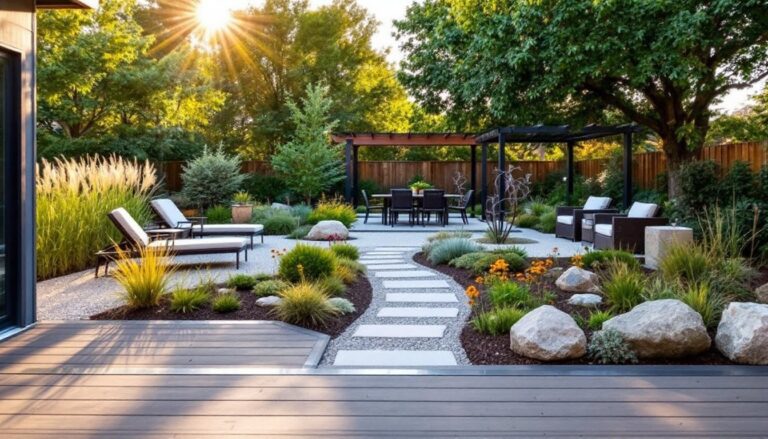
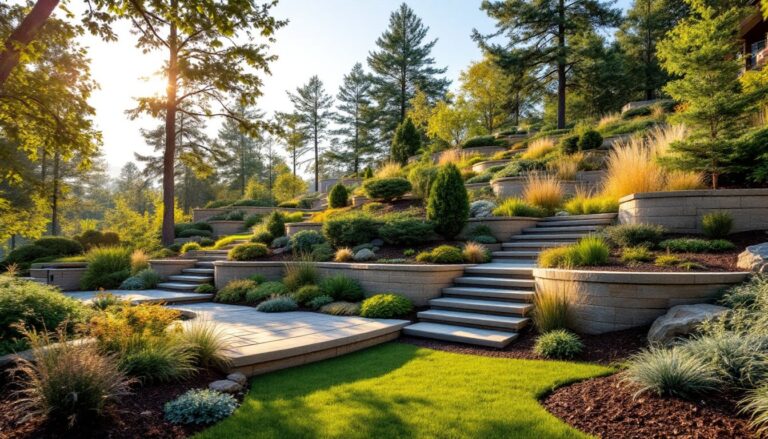
Hardscape, the non-plant materials like stone, brick, gravel, and pavers, grounds a landscape and provides structure that plants alone can’t achieve. It also extends usable space and adds visual interest.
Create Simple Pathways and Borders
A defined pathway from the street to your front door immediately elevates curb appeal. It doesn’t have to be expensive or complex. Mulch pathways cost almost nothing: rake it into a 2- to 3-foot-wide strip and edge it with plastic or metal landscape edging ($0.50–$1 per linear foot). Bricks for Landscaping is another affordable route, a single row of standard bricks ($0.50–$1.50 each) borders a mulch or gravel path and adds warmth.
For paved pathways, pea gravel or crushed granite (2 to 3 inches deep) creates a clean, finished look and costs less than pavers. Contain it with metal or plastic edging to prevent scatter. A 4-foot-wide gravel path about 15 feet long runs $50–$100 in material.
If you want something sturdier and more permanent, Crushed Granite Landscaping solutions pair durability with affordability. Alternatively, poured concrete or composite pavers cost more upfront but last decades with minimal maintenance.
Borders define beds and keep grass from creeping in. Low edging, 6 inches tall, works well for front yards. Metal landscape edging, steel borders, or even a single row of bricks create crisp lines that make the whole landscape look intentional. Don’t skimp on this: a sloppy edge undermines everything else.
When selecting pathways and borders, match the material style to your home. Modern homes suit clean, geometric paths: traditional homes work better with brick or natural stone. Consult pages like those discussing modern outdoor living to ensure your hardscape style aligns with your home’s architecture.
Add Focal Points and Visual Interest
A landscape with only plants and paths can feel flat. A focal point, something that draws the eye and anchors the composition, makes the space memorable.
Focal point ideas: A single specimen plant (a Japanese maple, weeping cherry, or upright juniper) in a center bed or corner catches attention and frames the house. A decorative rock or boulder (2–4 feet wide, placed near the foundation or at the path’s end) adds mass and texture. A small water feature, even a simple bird bath or recirculating fountain, introduces sound and movement. Landscape lighting (solar pathway lights, uplighting on shrubs, or accent lights on specimen plants) adds drama and safety, especially as dusk falls.
If your home has a porch, draw attention to it with container plantings on either side of the door. Use matching pots (even simple terracotta) with seasonal plantings: spring bulbs, summer annuals, autumn mums, or winter evergreens. This takes minutes to refresh and keeps the entrance current.
For small front yards, avoid overcrowding focal points. One strong focal point, a specimen shrub, a focal planting bed, or a lit entry, beats three competing elements. The goal is to guide the viewer’s eye, not scatter attention.
Research regional design trends by exploring sources like Southern Living to ensure your focal elements match your home’s character. Consistency between your hardscape style, plant selections, and decorative accents creates a cohesive, curated look that reads as intentional rather than random.
Budget roughly $30–$200 for a focal point depending on whether you choose a specimen plant, decorative rock, or lighting. Even the smallest investment transforms the landscape’s visual hierarchy and makes viewers stop and notice your home.