Table of Contents
ToggleCape Cod style, with its weathered charm, breezy elegance, and salt-air resilience, has captivated homeowners for generations. Whether you live on the Massachusetts coast or simply love the aesthetic, replicating that signature look in your front yard doesn’t require a beachfront address. From native grasses to whitewashed fencing, Cape Cod landscaping prioritizes durability and understated beauty over fussy ornament. This guide walks you through the core design principles, plant selections, hardscaping choices, and maintenance routines that define coastal-inspired curb appeal. You’ll discover practical ideas you can carry out this season, tailored to real-world budgets and skill levels.
Key Takeaways
- Cape Cod front yard landscaping prioritizes durability and understated beauty through salt-tolerant native plants, weathered wood accents, and white picket fencing that age gracefully.
- Native grasses like northern sea oats and switchgrass, paired with rugosa roses and bayberry, thrive in sandy coastal soil while supporting local pollinators with minimal maintenance.
- Hardscaping features such as crushed oyster shell pathways, low stone borders, and simple arbors create visual structure and define your landscape’s coastal identity.
- Reduce lawn area in favor of drought-hardy groundcovers and native sedges to combat saltwater spray and sandy soil while lowering watering and mowing demands.
- Seasonal maintenance—spring pruning and mulching, summer deadheading, fall dormant oil applications, and winter burlap protection—keeps your Cape Cod landscape resilient year-round.
Understanding Cape Cod Landscaping Style and Its Core Elements
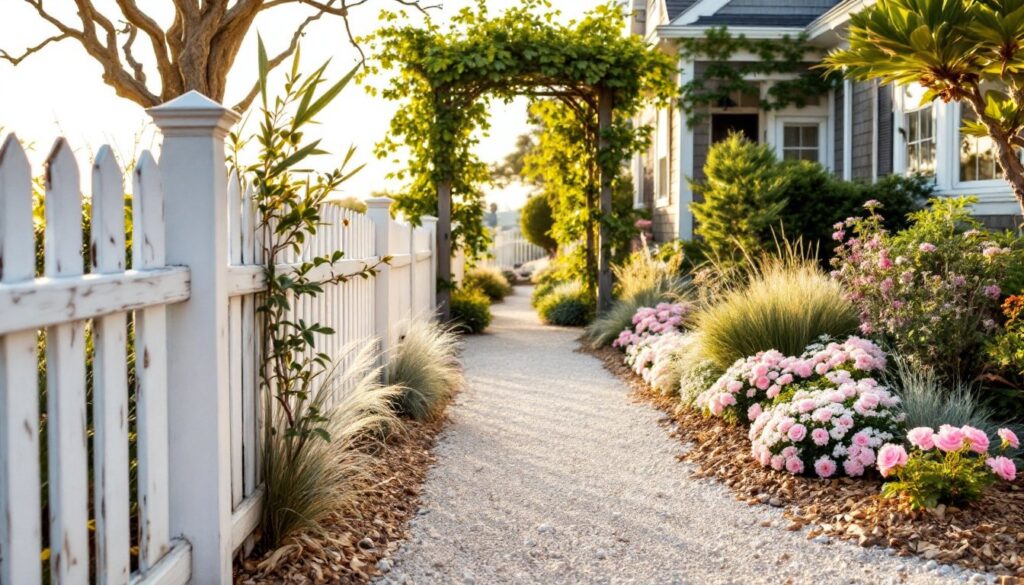
Cape Cod landscaping thrives on a balance between order and organic abundance. Unlike manicured formal gardens, this style embraces a relaxed, lived-in quality, white picket fences, sandy or gravel pathways, clusters of cottage plants, and weathered wood accents that age gracefully under coastal sun and salt spray.
The aesthetic pulls from maritime heritage: lighthouses, fishing villages, and shingled cottages define the visual vocabulary. Colors lean toward cool neutrals, whites, soft grays, pale blues, and warm sand tones. Plantings appear abundant yet functional, chosen for salt tolerance and low maintenance rather than exotic rarity.
Hardscaping materials reflect practicality: crushed shell or gravel stands up to coastal weather, oyster-shell borders echo seaside tradition, and weathered cedar or composite fencing weathers naturally without demanding frequent paint jobs. The design philosophy says: if it serves a purpose and looks timeless, it belongs.
Creating a Cottage Garden Foundation With Native Plants
A true Cape Cod front yard anchors itself with plants adapted to sandy, sometimes salty, nutrient-poor soil. Native species thrive where ornamental showpieces would struggle, and they support local pollinators without fussy fertilizers or pest treatments.
Start by assessing your microclimate. Coastal properties often experience salt spray, wind, and poor drainage in compacted sand. A soil test, available through your local cooperative extension, reveals pH, nutrient levels, and sand-to-clay ratios. Most coastal soils run acidic, which native ericaceous plants (blueberries, azaleas) naturally prefer.
When building planting beds, amend compacted sand with 2 to 3 inches of compost worked into the top 8 to 10 inches of soil. This improves water retention and adds organic matter without fundamentally changing the soil character that your natives expect. Space plants appropriately: a mature beach plum spreads 6 to 8 feet: rugosa roses sprawl 4 to 6 feet wide. Cramping them invites disease and pest pressure.
Best Plants for Salt-Tolerant, Low-Maintenance Landscapes
Grasses and Sedges:
- Northern sea oats (Panicum virgatum): Upright form, tan plumes in fall, 3 to 4 feet tall. Tolerates wind and salt spray.
- Beach grass (Ammophila breviligulata): Stabilizes sand, fine texture, 2 to 3 feet tall. Use in drifts for visual rhythm.
- Switchgrass (Panicum virgatum ‘Shenandoah’): Burgundy fall color, drought-tough, 4 to 5 feet tall.
Shrubs:
- Rugosa roses (Rosa rugosa): Fragrant single or double blooms, salt-tolerant, 4 to 6 feet. Withstands shearing.
- Beach plum (Prunus maritima): Spring white flowers, edible plums, 4 to 8 feet. Excellent for hedging.
- Bayberry (Myrica pensylvanica): Gray waxy berries, fine foliage, 6 to 9 feet. Aromatic and historically iconic.
- Inkberry holly (Ilex glabra): Dense evergreen, dark berries on female plants, 15 to 20 feet if unpruned (shear to 3 to 5 feet for hedging).
Perennials and Groundcovers:
- Black-eyed Susans (Rudbeckia fulgida): Yellow blooms, self-seeds reliably, 2 to 3 feet tall.
- Coreopsis (Coreopsis grandiflora): Long bloom period, fine foliage, 1.5 to 2 feet tall.
- Dusty Miller (Artemisia stelleriana): Silvery foliage, textural accent, 1 to 2 feet tall. Tolerates poor, sandy soil.
- Sedum and stonecrop: Low-growing succulents, minimal water needs, various colors and heights.
- Creeping juniper (Juniperus horizontalis): Ground-level evergreen, blue or green varieties, spreads 4 to 6 feet.
Group plants by mature size and water needs. Taller shrubs anchor the back of beds: low growers front them. Repetition of three to five plants creates visual cohesion, five rugosa roses spaced 4 feet apart make a stronger statement than a scattered collection of singletons. Check The Spruce for detailed planting guides specific to your hardiness zone and soil type.
Hardscaping Features That Define Cape Cod Curb Appeal
Hardscaping, the non-living structural elements, sets the skeleton of a Cape Cod yard. Fencing, pathways, borders, and entry features do the heavy lifting of visual identity.
Fencing: Classic white picket fencing embodies the style, though weathered gray and soft blue also read authentically. If you’re building new, opt for PVC composite (requires no painting) or cedar that you’ll stain every 3 to 5 years. Height typically runs 3 to 4 feet in front yards. For a DIY build, set 4×4 posts 6 feet apart in concrete, leaving 2 to 3 feet below grade for stability. Space pickets 1 to 1.5 inches apart for a traditional look: closer spacing blocks sight lines if privacy is a concern.
Pathways: Bricks for landscaping work beautifully for Cape Cod aesthetics, lay them in running bond or herringbone pattern over a 2-inch compacted sand base. Alternatively, crushed oyster shell or crushed granite echoes coastal tradition and costs less. Aim for 3 to 4 feet wide for welcoming entry walks. Edge pathways with rope or weathered wood borders to define beds and prevent gravel from scattering onto lawn.
Entry Features: A simple arbor or pergola over the entry gate or walkway adds height variation and frames the home’s front door. Coat wood with a gray stain or whitewash rather than bright paint. A low wall (18 to 24 inches) of stacked stone or granite blocks can border the front property line, grounding the landscape without feeling fortress-like.
Hardscaping creates structure: combine it with landscaping ideas for front yards to balance open space and planted beds.
Lawn Alternatives and Groundcover Solutions for Coastal Living
Saltwater spray, sandy soil, and coastal winds challenge traditional turf grass in exposed front yards. Consider reducing lawn area in favor of drought-hardy groundcovers and native sedges.
Turf Alternatives:
- Native sedges (Carex species): More salt-tolerant than lawn grass, finer texture, mowing optional (or cut to 4 to 6 inches annually).
- Creeping thyme: Fragrant, walkable, blooms purple or pink, needs full sun and well-draining soil.
- Ornamental grasses: Plant in drifts instead of solid turf: they create movement and require less maintenance.
Hardscape Solutions: In very windy or salty zones, shift from lawn to gravel or crushed shell pathways and mulched planting beds. This honestly reflects coastal reality and reduces watering, mowing, and chemical inputs. Small front yard landscaping works especially well when you maximize groundcover and minimize turf.
If you must have lawn, overseed with salt-tolerant fescue or bluegrass blends formulated for coastal regions. Avoid bent grass and perennial ryegrass in salt-spray zones. Water deeply but infrequently to encourage deep roots. Apply dormant oil spray in fall to reduce winter desiccation damage from salt and wind.
Seasonal Maintenance and Year-Round Landscaping Care
Cape Cod landscapes demand seasonal attention to thrive. Spring and fall are the heaviest labor periods: summer and winter require lighter touch-ups.
Spring (March–May):
Prune winter-damaged stems back to live wood: use sharp bypass pruners to make clean cuts at 45-degree angles just above buds. Apply a 2-inch layer of mulch around shrubs and perennials, keeping it 3 inches away from stems to prevent rot. Refresh edging on gravel pathways and crushed shell walks. As plants emerge, stake tall perennials or grasses if they’re prone to flopping. This is your last chance to amend soil before the growing season accelerates.
Summer (June–August):
Water young plantings (under 2 years) during dry spells: established natives need little supplemental irrigation. Deadhead spent flowers on roses and perennials to encourage more blooms. Monitor for pests, scale insects and spider mites thrive in heat and salt-stressed conditions. Handpick Japanese beetles or spray with neem oil in early morning. Trim back sprawling groundcovers if they encroach on pathways. Check hardscaping for weeds sprouting between pavers or in gravel.
Fall (September–November):
Cut back ornamental grasses to 3 to 4 inches in late November after they’ve provided winter structure. Clear leaf litter from plantings (it harbors pests and disease) but consider leaving some in perennial borders for overwintering insects. Plant spring-bulbs (tulips, daffodils) in October when soil cools. Apply dormant oil spray to evergreens and deciduous shrubs in late November before hard frost to prevent winter desiccation from salt spray.
Winter (December–February):
Monitor for salt spray damage on evergreens: install burlap screens on the windward side of tender plants if you live in a high-salt-exposure zone. Prune out dead wood and crossing branches on shrubs during dormancy. Plan next season’s plantings and order seeds early. Landscaping on a budget often means doing much of this work yourself rather than hiring seasonal crews.
Conclusion
Cape Cod landscaping thrives on authentic coastal materials, salt-tolerant plants, and low-maintenance design. By anchoring your front yard with native shrubs and grasses, defining space with weathered hardscaping, and committing to seasonal care, you’ll create curb appeal that grows more charming with age. Start with one section, a new fence, a cottage bed, a pathway, and expand from there. The goal isn’t perfection: it’s a welcoming, resilient landscape that reflects its maritime roots.