Table of Contents
ToggleBadgers don’t often make the headlines of typical pest control discussions, but when one takes up residence near your home, it becomes impossible to ignore. These stocky, nocturnal animals are powerful diggers that can undermine foundations, damage lawns, and create genuine safety hazards for pets and people alike. Unlike the high-volume pest problems most homeowners face, badger issues demand a different approach, one that balances persistence, legality, and humane practices. This guide walks you through recognizing badger activity, implementing prevention strategies, and knowing when professional help is necessary. Whether you’re dealing with an active problem or want to head one off before it starts, understanding badger behavior and control methods is the first step toward reclaiming your property.
Key Takeaways
- Badger pest control begins with identifying cone-shaped or D-shaped burrow holes 3–4 inches in diameter, mounded soil, and scat deposits in shallow pits to confirm you have an actual badger problem.
- Removing food sources is critical—store garbage in locked containers, bring pet food inside after feeding, use sealed compost bins, and install microchip-activated pet doors to eliminate access.
- Prevention through habitat modification, such as reducing grub populations, removing dense vegetation, and maintaining clear perimeters around foundations, deters badgers more cost-effectively than removal.
- Live trapping and relocation require checking local wildlife laws first, as many jurisdictions protect badgers or mandate permits; violating these regulations can result in steep penalties.
- Professional badger removal is safer and more reliable than DIY attempts, as handling trapped badgers is dangerous and experts have the legal knowledge and equipment for proper relocation.
- Combine exclusion barriers like 6-inch-deep fencing with food source elimination and ongoing habitat maintenance to prevent badger reinfestation long-term.
Why Badgers Become a Problem for Homeowners
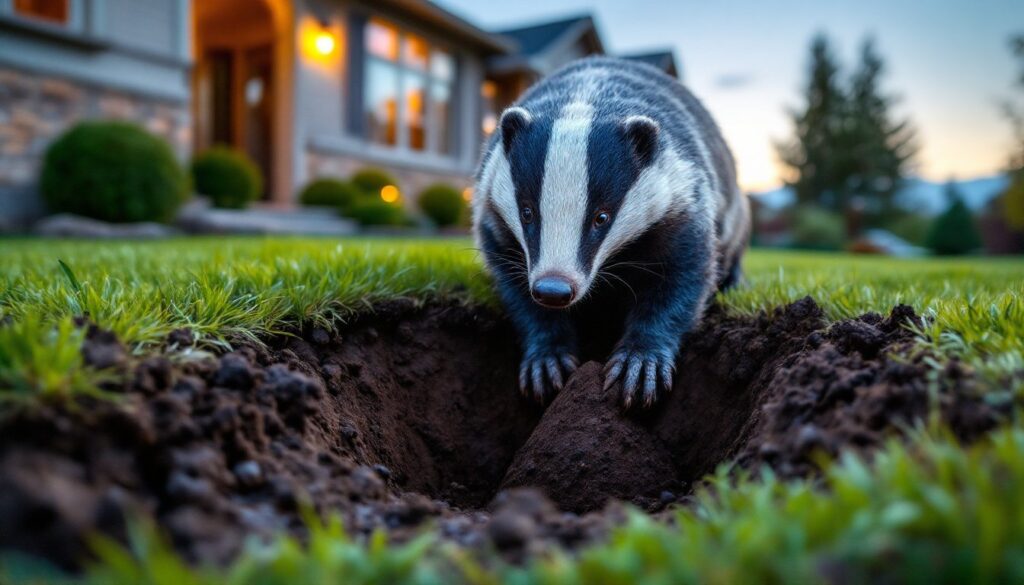
Badgers aren’t aggressive by nature, but they’re relentless problem-solvers when it comes to finding food. A single badger can dig multiple burrows across its territory, and those excavations are where property damage starts. Their tunnels undermine lawns, damage drainage systems, and can even weaken structural supports if they burrow close to foundations.
The real trouble begins when your property becomes a food source. Badgers hunt earthworms, grubs, and small rodents, all of which thrive in well-maintained lawns and gardens. If you’ve got compost piles, pet food left outside, or accessible garbage, you’re essentially rolling out a welcome mat. A badger won’t stop digging until it exhausts the food supply or until something convinces it to move along. Once a badger has established a sett (the term for a badger’s burrow system), it can occupy the same location for years, and that’s when property damage becomes severe. Most homeowners don’t realize they have a badger problem until the landscape shows the telltale signs of repeated excavation.
Signs of Badger Activity on Your Property
The first step to controlling a badger problem is confirming you actually have one. Badger damage looks different from other wildlife disturbance, and misidentifying the culprit leads to wasted effort and money.
Look for cone-shaped or D-shaped holes roughly 3 to 4 inches in diameter, often arranged in loose clusters across your yard or garden. These aren’t random: badgers follow consistent digging patterns. You’ll also notice mounded soil around burrow entrances and a worn path leading from the burrow to nearby food sources. Unlike moles, which create raised ridges and push soil straight up, badgers leave scattered dirt piles and obvious entrance holes.
Another telltale sign is scat (droppings). Badger droppings are dark, often contain undigested insect parts or plant material, and are typically deposited in shallow pits dug specifically for that purpose. You might see these “latrines” at the perimeter of your property. Fresh digging, damage to lawn edges, and overturned grass sections where they’ve hunted grubs are also strong indicators.
Identifying Burrows and Setts
Not every burrow on your property is a badger’s home. Badgers maintain multiple burrows across their range, and they’ll use and reuse the same setts seasonally. A true sett is larger and more complex than a typical burrow, you’re looking at interconnected tunnels that might span 10 to 20 feet or more.
The entrance holes to a sett are usually larger and more regularly maintained than temporary burrows. Fresh tracks in the soil around entrances, especially if you see them night after night, confirm active use. Badgers are creatures of habit: they use the same paths repeatedly. If you stake out a suspicious burrow entrance and see tracks or fresh digging every morning, a badger is almost certainly home. The four primary methods to remove badgers rely first on confirming you’re dealing with badgers and not another burrowing animal. That’s why visual identification matters so much before you invest time and money in removal strategies.
DIY Prevention Strategies and Habitat Modification
Prevention is almost always cheaper and less stressful than removal. Badgers are opportunistic but not desperate: if your property offers less reward than neighboring areas, they’ll move on. The trick is removing what makes your yard attractive to them.
Start with your landscape. Grubs and earthworms are primary food sources, so a healthy lawn with good drainage and aeration actually attracts badgers. If you’re dealing with an active problem, reducing grub populations through targeted treatment (applied by a licensed professional if required in your area) removes the magnet. Remove dead wood, leaf piles, and dense vegetation where badgers hunt. This isn’t about scalping your yard, it’s about removing dense cover that gives them safe hunting grounds.
Install proper exclusion barriers around vulnerable areas. A sturdy 6-inch-deep fence or barrier buried partially underground discourages digging. Badgers are strong but often choose the path of least resistance: if your garden or compost area has a dedicated barrier, they’re more likely to move along. Electric fencing works if you’re protecting livestock, but it’s overkill for most residential situations.
Securing Food Sources and Waste Management
This is non-negotiable: remove accessible food sources. Store garbage in heavy-duty containers with locking lids, preferably in a shed or garage rather than at the curb overnight. Pet food left outside is an open invitation, bring it in after feeding time. Compost piles attract badgers because they contain decomposing food scraps and harbor grubs and insects. If you compost, use a sealed, sturdy bin rather than an open pile.
Secure pet entrances too. If you have a doggy door, badgers can and will use it. Install a microchip-activated pet door that only opens for your pet, or lock the flap at night. Ground-level windows, vents, and crawl space doors should be inspected and reinforced, a determined badger can exploit gaps as small as 6 inches. Homeowners often overlook these entry points until damage spreads beyond the yard into the crawl space or foundation.
Trim back vegetation at least 3 feet from your home’s foundation. Dense shrubs and overgrown plants provide cover and denning sites. A clear perimeter makes badgers feel exposed, which deters them. Regular lawn maintenance, mowing, raking, and removing debris, removes habitat complexity that attracts badgers and other wildlife.
Humane Removal and When to Call a Professional
If prevention hasn’t worked and badgers are actively digging on your property, humane removal is your next step. Live trapping and relocation is the most effective method, but it requires knowledge of local regulations. Many jurisdictions protect badgers or require permits before removal. Check your state wildlife agency’s guidelines before setting traps, some areas allow relocation, others don’t, and penalties for violating wildlife laws can be steep.
If trapping is legal in your area, bait traps with peanut butter, grubs, or earthworms, badgers find these irresistible. Position traps along established pathways or near burrow entrances. Check traps daily (usually a legal requirement) and call in a licensed wildlife removal service immediately if you catch anything. This is where DIY ends and professionalism begins. Handling a trapped badger is dangerous: they’re stronger than they look and will defend themselves aggressively. Professional wildlife control operators have insurance, proper containment equipment, and legal routes for relocation.
One-way doors on burrow entrances can work if you’re patient and careful. These allow badgers to exit but not re-enter. Set them up, monitor for several days to confirm all occupants have left, then seal the burrow. But, this method fails if multiple burrows exist, the badger will just use another tunnel. For this reason, a professional is almost always faster and more reliable.
Chemical repellents (capsaicin sprays, ammonia-soaked rags, predator urine) have limited effectiveness. Badgers adapt and ignore them after a few nights. Don’t waste time or money on these unless you combine them with more robust exclusion work. Your local pest control services can assess your situation and recommend removal methods suited to your property and local regulations. Many also offer follow-up habitat modification advice to prevent reinfestation.
Avoid poison or lethal control. It’s inhumane, often illegal without a permit, and creates secondary poisoning risks for raptors and other predators. Plus, removing badgers without addressing habitat factors simply invites new ones to move in. A licensed pest control professional evaluates the whole picture, entry points, food sources, and legal options, ensuring the problem doesn’t just relocate to your neighbor’s yard.
If you’re planning structural repairs as part of your remedy, say, reinforcing a foundation or installing vents, platforms like HomeAdvisor and ImproveNet can help you find local contractors and estimate costs for the repairs badger damage necessitates.
Conclusion
Badger problems don’t resolve themselves, but they’re also not unsolvable. Combining prevention, secure food sources, habitat modification, and exclusion barriers, with humane removal strategies tackles both the animal and the conditions that attracted it. Know your local wildlife laws before acting, and don’t hesitate to call professionals for trapping or relocation. Your property is worth protecting, and a badger-free yard starts with understanding why they came in the first place.