Table of Contents
ToggleTired of mowing every weekend? A grassless front yard isn’t just a trend, it’s a practical solution for busy homeowners. Whether you’re dealing with poor soil, shaded areas, or simply want to reduce water usage and maintenance, eliminating grass opens up creative possibilities. From decorative hardscapes to lush groundcovers, there are countless ways to build a beautiful, functional no-grass landscape that requires less water, fertilizer, and upkeep than a traditional lawn. This guide walks you through the benefits and proven techniques for designing a modern front yard without grass.
Key Takeaways
- Front yard landscaping ideas without grass reduce water usage by 50–80% compared to traditional lawns while cutting maintenance time from 2–4 hours monthly to just 5–10 hours per season.
- Hardscape materials like crushed granite, permeable pavers, and mulch create structure and manage drainage while requiring zero ongoing plant care.
- Groundcovers such as creeping thyme, sedum, and ornamental grasses provide attractive texture and suppress weeds while thriving in various sun and soil conditions.
- A cohesive no-grass design blends 2–3 complementary hardscape materials with layered plants to create visual depth and curb appeal aligned with your home’s architecture.
- DIY installation cuts professional landscaping costs by 60–70% when you phase projects, prep properly, rent tools, and source materials locally.
- A well-designed grassless front yard increases resale value while supporting pollinators and reducing your home’s environmental footprint.
Why Go Grassless: Benefits of Removing Lawn from Your Front Yard
Removing grass from your front yard delivers real, measurable benefits beyond aesthetics. Water savings are substantial, a typical lawn uses 1,500–2,000 gallons per month during the growing season, while a mixed hardscape and groundcover design cuts that by 50–80%. You’re also eliminating mowing, fertilizing, weed control, and seasonal aeration entirely. In many climates, grass struggles in shade, poor drainage, or compacted soil: a no-grass design adapts to your site’s actual conditions rather than fighting them. From an ecological standpoint, native plants and hardscapes attract pollinators, reduce runoff, and lower your home’s carbon footprint. Plus, a well-designed grassless front yard increases curb appeal and can improve resale value by showcasing thoughtful landscaping rather than a generic lawn. Most homeowners report spending 5–10 hours per season on maintenance instead of 2–4 hours monthly.
Low-Maintenance Hardscape Solutions for Your Front Yard
Hardscaping, the non-living elements of your landscape, forms the backbone of a grassless design. Materials like concrete, pavers, mulch, and stone create structure, manage water runoff, and define pathways without ongoing plant care.
Gravel, Mulch, and Stone Pathways
Gravel and crushed stone are budget-friendly, instant solutions. A 2–3 inch layer of 3/4-inch crushed granite or decomposed granite works well for pathways and ground cover: it’s stable underfoot, compacts gently, and won’t scatter like pea gravel. Crushed Granite Landscaping: Transform shows how to maximize this versatile material’s durability and aesthetic appeal in any setting.
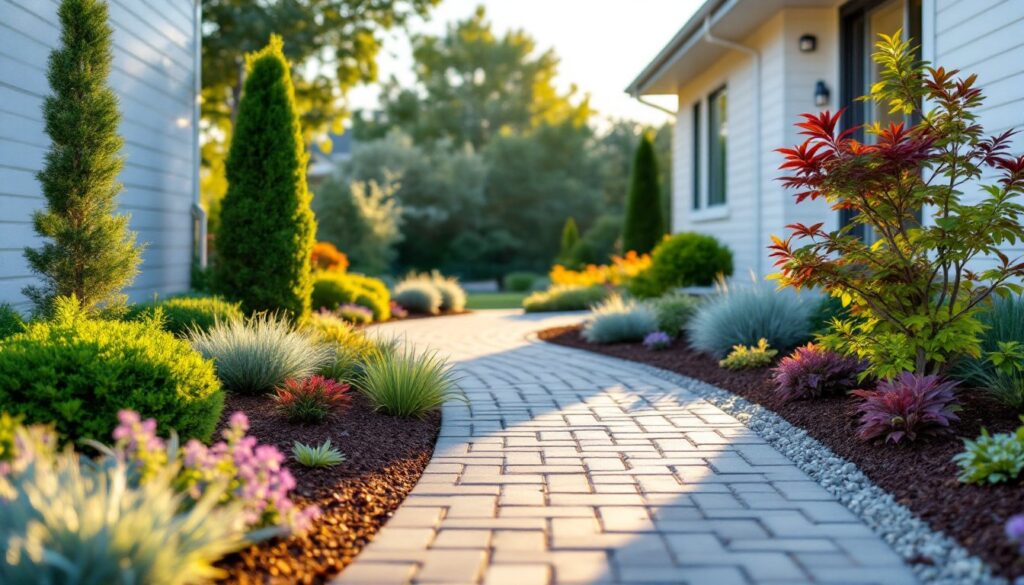
For formal pathways, interlocking pavers or standard concrete pavers (typically 2 inches thick, 12×12 or 18×18 inches) provide clean lines and easy installation. Lay a 4-inch compacted base layer of 3/4-inch gravel, add 1 inch of sand, then set pavers level and joint them with polymeric sand (which hardens when wet and prevents weed growth). Bricks for Landscaping: Transform explores creative patterns and placement strategies that elevate front-yard appeal.
Mulch, shredded bark, wood chips, or recycled rubber, suppresses weeds in planting beds around trees and shrubs. A 3-inch depth is standard: refresh annually as it breaks down. Avoid dyed mulch: natural wood chips blend better with surrounding plants and cost less. Stone mulch (river rock, pea gravel) works in ornamental beds where you want a cleaner, longer-lasting look, though it doesn’t improve soil as organic mulch does.
For larger hardscape areas, consider permeable pavers or porous asphalt alternatives that allow water infiltration, reducing drainage problems common in conventional driveways.
Decorative Plants and Groundcovers to Replace Grass
Groundcovers fill space where grass once was, anchor the design, and require only occasional trimming. Choose low-water plants suited to your USDA hardiness zone and sun exposure.
Creeping thyme and sedum thrive in dry, sunny sites and require zero supplemental watering once established (4–6 weeks). They’re 4–12 inches tall, flower attractively, and tolerate foot traffic. Creeping juniper and salvia work for shaded areas and sandy soils. In cooler climates, bugleweed and ornamental fescues spread densely and suppress weeds.
Shrubs anchor focal points: dwarf Japanese maple (15–25 feet tall at maturity, but available in 4–8 foot varieties), boxwood (formal, compact, slow-growing), and butterfly bush (drought-tolerant, attracts pollinators) add height and interest. Superior Landscaping: Transform demonstrates how thoughtful plant selection transforms a yard into an eco-friendly space that requires minimal intervention.
Ornamental grasses like blue fescue and black mondo grass echo the texture of lawns while looking intentional and modern. Small Front Yard Landscaping breaks down strategies for maximizing visual impact in compact spaces, crucial if your front yard is under 500 square feet.
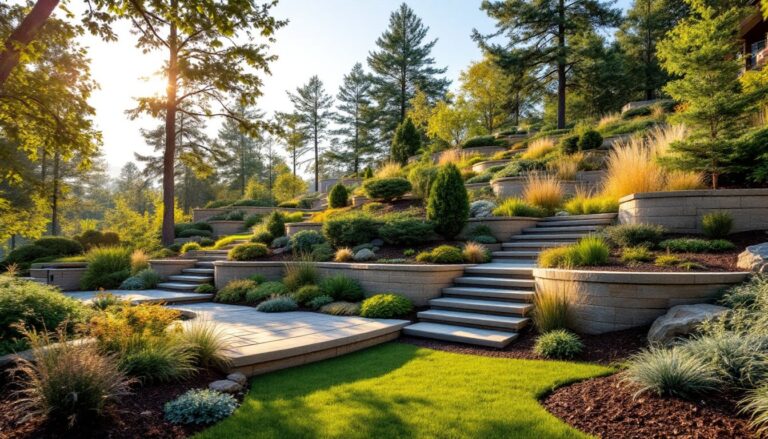
Layer groundcovers with specimen shrubs and accent plants to create depth. Space plants according to mature size (usually labeled on tags) to avoid overcrowding. Apply 3–4 inches of mulch between plants, leaving a few inches clear around stems to prevent rot.
Creating a Cohesive Design with Mixed Materials
A successful no-grass landscape blends hardscape, plants, and accents into a unified visual story. Start by mapping the site: measure the front width and depth, note sun exposure (full sun = 6+ hours: part shade = 3–6 hours: full shade = <3 hours), and identify existing structures like foundation plantings, steps, or a driveway.
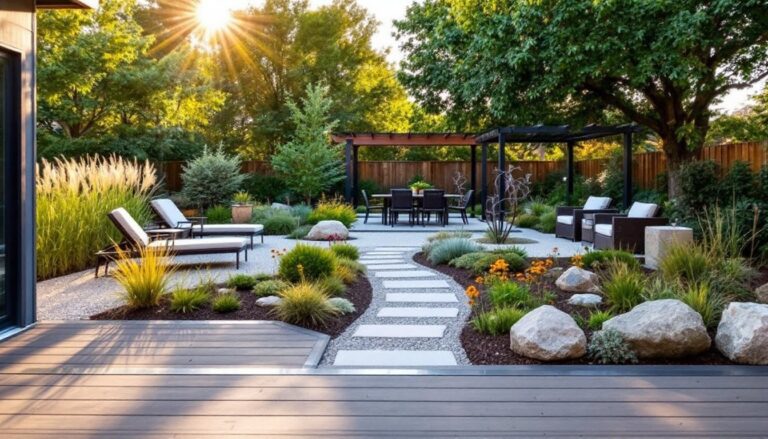
Choose 2–3 hardscape materials that complement your home’s architecture. A modern home pairs well with clean concrete pavers and minimalist plantings. A farmhouse or cottage style benefits from warm-toned mulch, curved pathways, and abundant flowering shrubs. Sketch a layout: position a focal point (a specimen shrub, bench, or accent rock), frame pathways, and define planting zones.
Maintain consistent spacing between materials. A 2-foot-wide mulch border around the home’s foundation softens the transition from siding to landscape. Pathways should be at least 3 feet wide for comfortable foot traffic. If your front yard is small, concentrate hardscape near the entry and soften side areas with groundcovers and shrubs.
Color and texture variety prevents monotony. Mix matte (wood mulch) and reflective (stone) finishes. Combine fine-textured groundcovers with bold-leaved plants. Use a limited color palette, three to four plant colors maximum, so the eye flows naturally rather than jumping between contrasting elements. Landscaping Ideas for Front provides a comprehensive reference for achieving curb appeal through thoughtful design principles.
Budget-Friendly Tips for DIY Installation
Professional landscaping costs $5,000–$15,000 for a small front yard: doing it yourself cuts that by 60–70% if you’re willing to invest time.
Start small. Install hardscape in phases: begin with a main pathway or entry bed, then expand in subsequent seasons. Sourcing materials locally (landscape supply yards, not big-box stores) saves 20–30% on bulk gravel, mulch, and stone.
Safety first: wear heavy work gloves, safety goggles, and dust masks when moving stone or mixing sand. Back strain is real, use a dolly for heavy pavers, and enlist a helper.
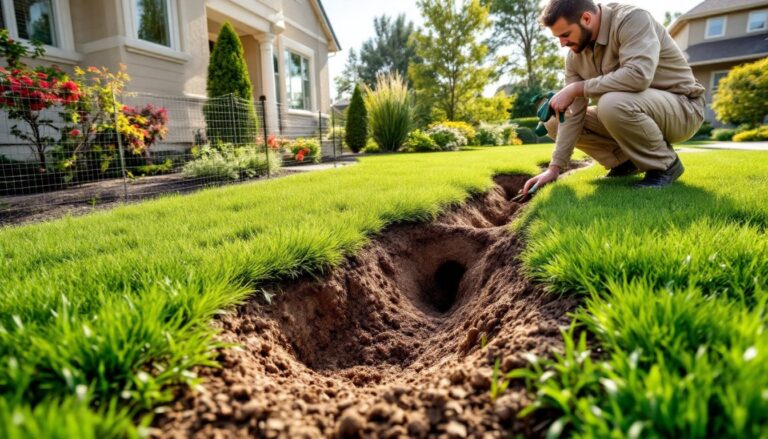
Prep is everything. Remove grass and roots with a spade or rent a sod cutter (typically $40–60/day). This is harder than it looks: take your time. Compact the base layer with a hand tamper or rent a plate compactor ($35–50/day). Poor prep leads to uneven pavers, settling, and weed invasion.
Landscaping on a Budget: Transform covers cost-effective strategies and material sourcing tricks that stretch dollars without compromising design. For planting, buy 1–2 year-old shrubs rather than mature specimens: they establish faster and cost 40% less. Divide perennials from your own or neighbors’ gardens to fill groundcover zones.
If a section involves drainage challenges or structural work (retaining walls higher than 3 feet, major grading), consult or hire a professional. Landscaping Ideas for Side shows how strategic professionalism in tricky spots saves money and headaches down the line. For inspiration and proven designs, resources like Gardenista showcase dozens of lawn-free front-yard transformations.
Rent tools rather than buy. A plate compactor, power wheelbarrow, or sod cutter used once doesn’t justify the $500+ purchase price. Budget $200–300 for tool rentals and you’ll save labor hours and frustration.
Conclusion
A grassless front yard isn’t a compromise, it’s an upgrade. You’ll reclaim weekends, save water, and create a landscape that works with your site instead of against it. Start with a clear design, phase installations to stay within budget, and don’t skip prep work. Whether you’re drawn to hardscapes, native plants, or a mix, the modern no-grass landscape is both practical and beautiful.