Table of Contents
ToggleNot everyone has hours to spend edging beds and pulling weeds. A modern low-maintenance front yard doesn’t mean settling for boring, it means working smarter with materials and plants that thrive with minimal fussing. Busy homeowners can create a polished, contemporary look by combining hardscaping, drought-tolerant plants, and smart design choices that cut watering, mowing, and maintenance in half. This guide walks you through practical strategies to build a front yard that looks intentional and modern while keeping upkeep to a manageable level.
Key Takeaways
- Modern low-maintenance front yard landscaping combines hardscaping, drought-tolerant plants, and smart design to cut watering, mowing, and maintenance in half while maintaining a polished, contemporary aesthetic.
- Permeable pavers, crushed granite, and recycled materials like rubber mulch are the backbone of low-maintenance yards, lasting 20+ years with minimal care and supporting local drainage codes.
- Native, drought-resistant plants like sedums, salvias, and ornamental grasses thrive with minimal watering after year one and eliminate the need for frequent fertilizing and replacements.
- Grouped plantings and strategic focal points create visual intention and cohesion while reducing overall maintenance compared to scattered specimens throughout the yard.
- Reducing lawn to 20% of your front yard and replacing high-visibility zones with hardscape or planting beds dramatically lowers mowing frequency and management time.
- Low-maintenance landscaping also delivers financial and environmental benefits: fewer water bills, reduced fertilizer costs, and support for local ecosystems through native plant selection.
Why Choose Low-Maintenance Front Yard Design
A low-maintenance front yard frees up time for life outside the weekend lawn routine. Beyond the obvious time savings, there’s real financial benefit: less fertilizer, fewer replacement plants, reduced water bills, and no need to hire seasonal cleanup crews.
Modern <a href="https://hearthandhomelife.com/professional-landscaping-service/”>landscaping also values sustainability. Replacing thirsty turf with native plants and hardscape supports local ecosystems and cuts your home’s water footprint. Structurally, hardscaping reduces soil erosion and mud tracking into the house, a practical bonus that builders have long known.
Visually, a well-designed low-maintenance yard often looks more intentional than a conventional lawn-and-shrub setup. Clean lines, strategic plantings, and layered hardscape create curb appeal that sells both the home’s aesthetics and the owner’s good sense.
Smart Hardscape Solutions for Minimal Upkeep
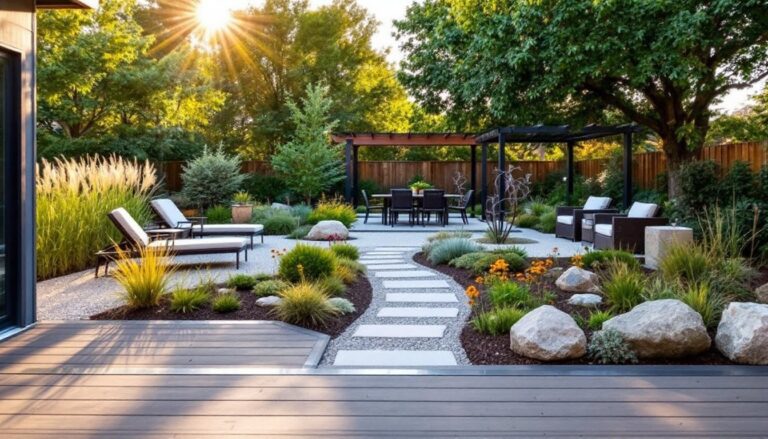
Hardscaping, paving, gravel, stone, and other non-plant elements, is the backbone of low-maintenance design. It replaces turf in high-traffic areas, defines planting zones, and creates visual rhythm without requiring water, fertilizer, or mowing.
Pavers and Permeable Surfaces
Poured concrete and asphalt offer quick, affordable coverage, but they don’t age as gracefully. Concrete can crack and stain: asphalt softens in heat and requires resealing every 3–5 years.
Permeable pavers, made from recycled plastic, porous concrete, or open-grid designs, are the modern choice. They handle runoff during heavy rain (important for curb appeal and local drainage codes), look sleek, and last 20+ years with minimal care. Lay pavers over compacted gravel base and landscape fabric to prevent weed growth. The initial cost runs higher than poured concrete, but you’ll skip resurfacing entirely.
Flagstone, bluestone, and slate add premium appeal and age beautifully outdoors. They’re heavier and require skilled installation (consider hiring for larger patios), but they don’t stain like concrete and handle freeze-thaw cycles well.
Gravel and Mulch Alternatives
Crushed granite is the go-to for crushed granite landscaping because it compacts firmly, drains well, and looks contemporary for years. Unlike bark mulch, it won’t decompose and need yearly replacement. A 3-inch depth covers roughly 100 square feet per cubic yard: plan for a refresh every 2–3 years if foot traffic is heavy.
Recycled asphalt costs less and binds together in moisture, creating a firmer surface than loose gravel. It’s dark and modern-looking but can track onto shoes and driveways in hot weather.
Rubber mulch (shredded tire crumb) is popular around plant beds near the house. It suppresses weeds, insulates soil, and lasts longer than wood chips. Install it over landscape fabric and edge beds with steel or composite edging to keep it tidy and prevent spill-out onto lawn or hardscape.
For any gravel or loose mulch, proper edging is non-negotiable. Aluminum, composite, or steel borders contain material, define planting zones, and make the whole yard look intentional rather than accidental.
Drought-Resistant Plants and Native Species
The plant palette makes or breaks a low-maintenance yard. Avoid exotic specimens that demand specific soil, frequent watering, or coddling through winter. Instead, choose perennials and shrubs native to your region that naturally thrive in local climate and soil.
Sedums, salvias, and ornamental grasses are drought-tolerant workhorses. Once established (usually by year two), they need water only during extended dry spells. Grasses add movement and texture without flowering requirements: varieties like Festuca and Bouteloua thrive across most U.S. zones and turn warm tones in fall without color fading mid-season.
Shrubs like Juniper, Ceonothus, and Rosemary establish deep roots and handle heat and cold variably by region, research your USDA hardiness zone and local rainfall patterns before buying. Many nurseries now label plants by water needs and hardiness, making selection easier.
Spacing matters: Plant at mature spread, not tiny nursery size. It looks sparse the first year but prevents crowding that invites disease and requires pruning. Space according to hardiness zone and mature size: ask the nursery if unsure.
Amend soil once at planting with compost or aged manure to boost root establishment, then reduce supplemental watering after year one. A 2–3 inch mulch layer around plants conserves soil moisture and suppresses weeds, cutting watering frequency by 30–50%.
Modern Design Elements That Reduce Work
Smart design choices multiply low-maintenance benefits. Modern landscapes prioritize focal points (a feature that draws the eye) over demanding complexity. A sculptural plant, a specimen tree with multi-season interest, a built-in seating edge, or a water feature anchors the space and lets you use simpler plantings elsewhere.
Landscaping ideas for front yards often emphasize grouped plantings over scattered specimens. Group three to five of the same plant together: it’s more visually cohesive, easier to water and prune, and creates visual momentum. A single plant scattered among others reads as accidental: a grouping reads as intentional.
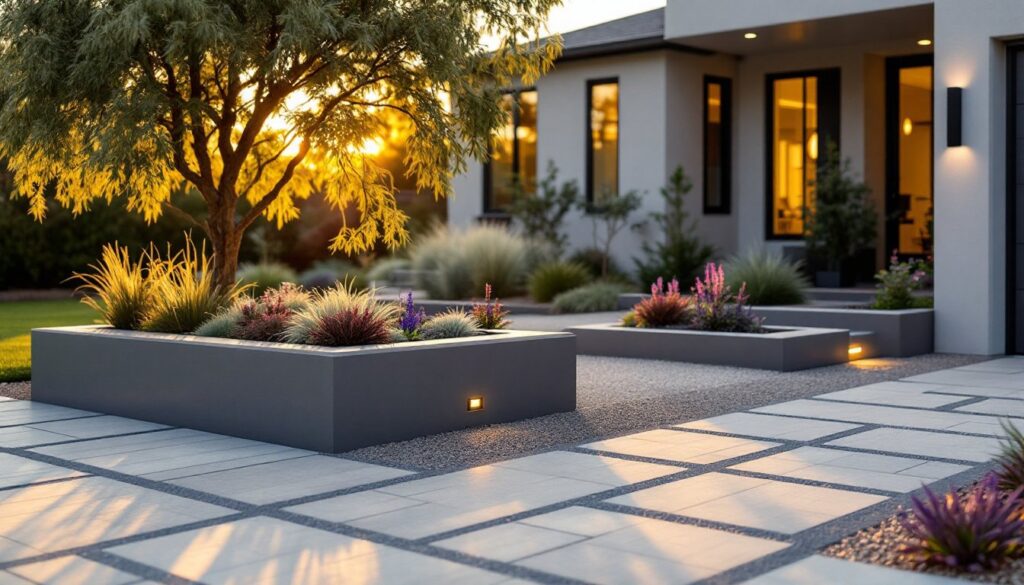
Raised beds and planters contain plants, protect against soil compaction, warm soil faster in spring (extending the growing season), and reduce bending during maintenance. Use composite or steel edging: wood rots and invites termites in warmer regions. Fill with quality planting mix rated for containers or raised beds, don’t use garden soil, which compacts and drains poorly in confined spaces.
Lighting transforms low-maintenance yards into evening destinations. Low-voltage LED path lights (running on 12-volt transformer wire) use minimal power, stay cool, and cast soft light across hardscape and plantings. Solar stake lights are tempting but often flicker and dim by mid-season: contemporary outdoor designs lean toward hardwired systems even though upfront cost.
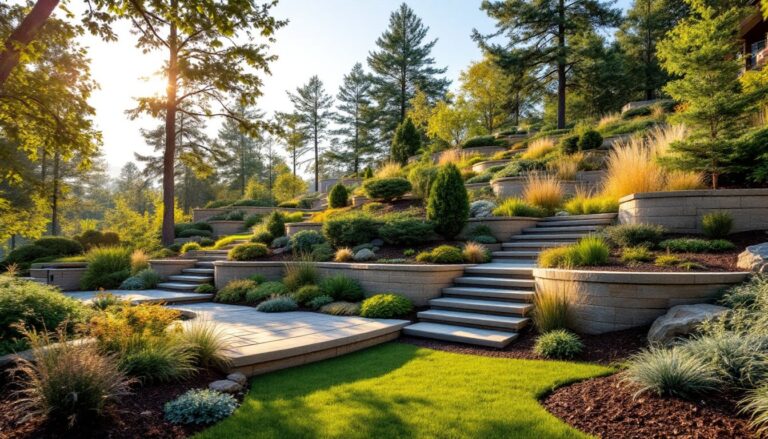
Slopes and grade changes add visual interest without extra plants. A gentle slope transitions lawn to beds and improves drainage in low-lying zones. A retaining wall built to code (check local IRC standards for height and drainage) creates a modern edge and opens flat yards vertically.
Minimal lawn is the modern move. Keep turf only in areas where it functions, a play zone or seating area, and replace high-visibility, high-traffic zones with hardscape or beds. A 20% lawn surrounded by design is easier to manage than 100% turf.
Conclusion
Modern low-maintenance front yard landscaping isn’t a compromise, it’s a design choice that respects both time and sustainability. By layering hardscape, grouping plants, and selecting species suited to your climate, you create a front yard that’s attractive, functional, and genuinely manageable. Start with gravel or pavers in one zone, add a small grouping of drought-tolerant shrubs, and expand as your confidence and budget allow. The result: a home that looks thoughtfully designed, not neglected.