Table of Contents
ToggleArizona’s intense heat, low rainfall, and intense UV exposure mean that traditional landscaping approaches simply won’t work in desert climates. Homeowners in Phoenix, Scottsdale, Tucson, and other Arizona communities quickly discover that lush green lawns demand constant watering, attract pests, and drain both wallets and local water resources. The good news: Arizona front yard landscaping can be stunning, practical, and genuinely low-maintenance when you work with the climate instead of against it. This guide walks through proven design strategies, drought-tolerant plants, smart hardscaping, and irrigation techniques that transform Arizona yards into attractive outdoor spaces without the year-round upkeep.
Key Takeaways
- Arizona front yard landscaping must work with the desert climate by using drought-tolerant plants and strategic hardscaping instead of water-intensive traditional lawns.
- Desert-friendly plants like palo verde trees, agave, lantana, and ornamental grasses require minimal supplemental water once established and deliver year-round color and texture.
- Drip irrigation systems and soaker hoses deliver water efficiently to plant roots while grouping plants by water needs (hydrozoning) prevents overwatering and waste.
- Hardscaping materials such as decomposed granite, river rock, and pavers reduce compaction, suppress weeds, and manage monsoon runoff while framing plantings beautifully.
- Layered landscape design with trees for shade, shrubs for structure, groundcovers for texture, and strategic hardscape pathways creates visual depth without requiring a traditional lawn.
- Most Arizona municipalities offer rebates for installing drip irrigation systems or removing turf, making water-wise landscaping upgrades financially affordable.
Why Arizona Front Yards Need Special Landscaping Considerations
Arizona’s desert environment presents three core challenges that shape landscape design: extreme heat (summer temps regularly exceed 110°F), minimal rainfall (Phoenix averages just 8 inches annually), and intense sun exposure that scorches traditional ornamental plants.
These conditions mean that a design approach that works in California’s coastal zones or the Pacific Northwest won’t translate here. Native and adapted plants have evolved specifically to handle Arizona’s aridity, intense light, and alkaline soil. Hardscape materials, rocks, pavers, and gravel, not only look good but also manage heat absorption and reduce water runoff in sudden monsoons.
Another factor: Arizona’s monsoon season (July through September) brings sudden, heavy downpours that wash away loose mulch and erode soft soils. Your front yard layout and drainage strategy must account for these seasonal bursts. Understanding these baseline conditions helps homeowners make smart plant selections and design choices that age well instead of requiring constant replacement.
Desert-Friendly Plants That Thrive in Arizona Heat
The backbone of any low-maintenance Arizona front yard is a thoughtful plant palette. Ornamental grasses, native shrubs, and drought-adapted accent plants deliver color and texture without becoming a water-guzzling liability.
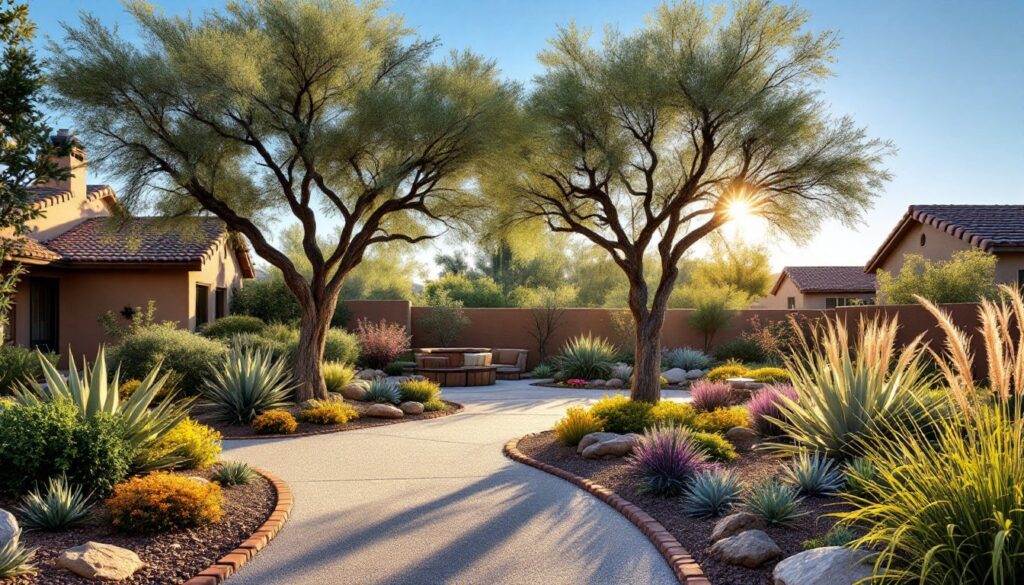
Palo verde trees are an Arizona staple, green bark, delicate filtered shade, and virtually no supplemental watering once established (12+ months after planting). Desert marigold, autumn sage, and blanket flower add seasonal blooms without fussiness. Desert hackberry, a native tree, creates naturalistic shade and hosts wildlife.
When selecting plants, check their USDA hardiness zone rating and water requirements at purchase. Many nurseries in Arizona label plants by water need: very low (once established, minimal to no summer watering), low (occasional deep watering in summer), and moderate (more frequent, but still far less than traditional shrubs).
Succulents and Drought-Resistant Perennials
Succulents are not just trendy, they’re practical choices for Arizona. Agave, yucca, and sotol provide dramatic vertical interest and need almost zero supplemental water once roots establish. Smaller succulents like sedum and echeveria work as accent plants or groundcovers in berms (raised mounds of soil).
Desert-adapted perennials like lantana, desert zinnia, and angelita daisy bloom reliably through spring and early summer without babying. Pair them with ornamental grasses, purple three-awn, desert muhly, or black grama, which offer movement, seasonal color change, and erosion control on slopes. These grasses are hardy, native to the Southwest, and thrive on rainfall alone once established (usually 1–2 growing seasons).
One caveat: newly planted trees and shrubs need consistent deep watering (not frequent shallow sprinkling) for the first year. After that, most desert-adapted plants need only occasional supplemental water during peak heat or extended dry spells.
Hardscaping and Rock Features for Arizona Front Yards
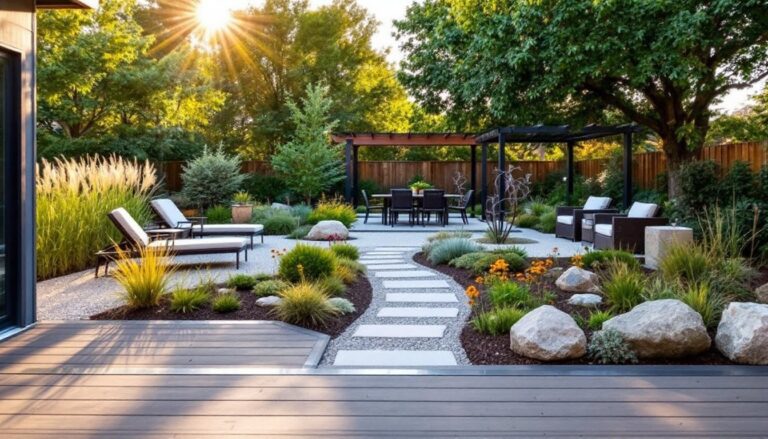
Hardscape, pavers, gravel, rock borders, and retaining walls, is not just decoration in Arizona: it’s structural and functional. Rocks and gravel reduce compaction, absorb and slowly release heat, suppress weeds, and frame plantings beautifully. <a href="https://hearthandhomelife.com/crushed-granite-landscaping/”>Crushed granite landscaping is a popular choice because it’s affordable, locally sourced in many Arizona communities, and complements desert plants.
Common hardscape materials include decomposed granite (DG, a compacted mixture of crushed granite and dust), river rock, lava rock, and colored decorative gravel. DG is budget-friendly and compacts into a stable surface: river rock and lava rock are heavier and more formal: decorative gravel is pricier but offers aesthetic variety.
For pathways and sitting areas, consider flagstone, saltillo pavers, or concrete pavers. Flagstone is durable but pricey: saltillo (terracotta-style) offers warmth and authenticity but requires sealing: concrete is economical and practical. Bricks for landscaping can define beds and create low borders, though they’re less common than other hardscapes in strict desert designs.
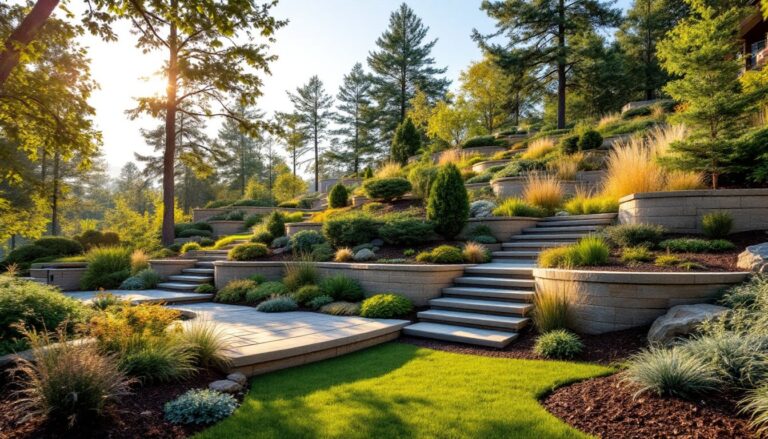
Retaining walls manage slope runoff and create planting terraces. Stacked stone, concrete blocks, or mortared brick work, depending on soil load and local building code requirements (check with your city or county, significant slopes may need a licensed engineer’s sign-off). A 2–3 foot wall is usually a DIY-friendly project if you compact the base properly and ensure good drainage behind the wall.
Water-Wise Irrigation Solutions for Desert Landscaping
Even drought-tolerant plants need water during establishment and extreme heat. The key is delivering water efficiently, deep, infrequent soaking rather than daily shallow sprinkles, which encourage weak roots and waste water to evaporation.
Drip irrigation is the gold standard for Arizona. Emitters deliver water slowly and directly to soil around plant roots, minimizing evaporation and runoff. Drip systems can be connected to a timer, turning on at dawn (when temps are low and winds calm) and covering larger areas with far less water than traditional sprinklers. A basic drip setup, tubing, emitters, and a controller, costs $50–$200 for a modest front yard and is installable in an afternoon.
Soaker hoses are a simpler, cheaper alternative for smaller beds: lay them along plant rows, cover with mulch, attach to a timer, and you’re done. Micro-sprinklers work for trees and broader plantings but aren’t as efficient as drip.
Whatever system you choose, group plants by water needs (hydrozoning). Heavily irrigated trees and shrubs go in one zone: drought-adapted shrubs and grasses in another: succulents and extremely drought-tolerant plants in a third. This prevents overwatering drought-lovers while ensuring thirsty plants get enough. Most Arizona municipalities offer rebates for installing drip systems or removing turf, check your local water authority’s website. Set your controller to water in early morning (4–7 a.m.) and adjust schedules seasonally: more frequent in June–August, minimal November–February.
Creating Visual Interest Without Grass
A traditional lawn in Arizona is a water-intensive liability. Instead, design with layering: tree canopy for overhead shade, shrubs for mid-story structure, groundcovers and ornamental grasses for texture, and hardscape for clear circulation.
Start with a focal point, a specimen palo verde tree, a sculptural agave, or a water feature (even a small recirculating fountain adds visual punch and cooling). Arrange shrubs of varying heights and colors around it. Desert-adapted accent plants like desert rose, desert marigold, and esperanza add pops of seasonal color. Ornamental grasses (purple three-awn, desert muhly) shimmer and move in the breeze, breaking up static woody plants.
Use mulch strategically: a 2–3 inch layer of wood chips (not pine bark, which acidifies alkaline soil) or desert landscape mulch (a mix of wood chips and compost) around trees and shrubs suppresses weeds, retains moisture, and slowly enriches soil. Avoid piling mulch against tree trunks (causes rot): keep it 6–12 inches away from stems.
For ground-level interest, try Mexican bush sage, trailing lantana, or desert zinnia as a low-water understory. Hardscape, curved pathways, seating areas, or rock gardens with low-growing succulents, organizes space and guides movement. This layered approach creates depth, visual continuity, and reduces the impression of emptiness that bare gravel can evoke. Landscaping ideas for front yards that emphasize naturalistic planting and selective hardscaping age beautifully and require far less maintenance than traditional lawns.
Conclusion
Arizona front yard landscaping succeeds when it aligns with the desert climate: native and drought-adapted plants, strategic hardscaping, efficient irrigation, and layered planting design. This approach cuts water costs, reduces ongoing maintenance, and creates attractive outdoor spaces that feel authentic to the region. Resources like Sunset and design platforms like Houzz offer visual inspiration and professional contractor connections. Start with one or two zones, observe how plants perform through a full year (including summer heat and monsoon season), and refine from there.