Table of Contents
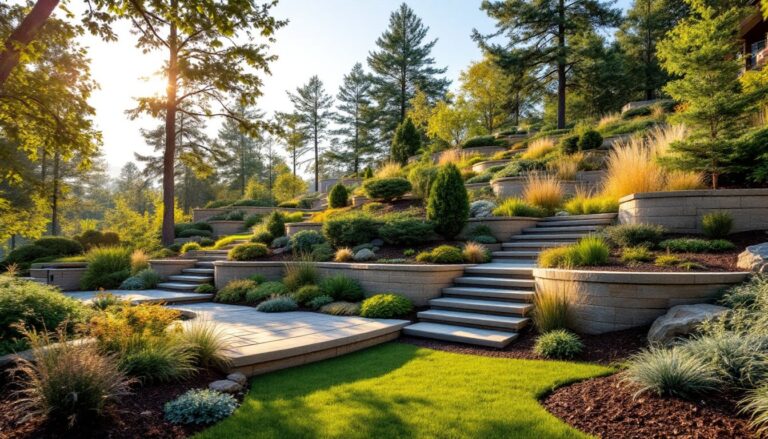
ToggleA sloped backyard doesn’t have to be a <a href="https://hearthandhomelife.com/landscaping-ideas-for-front-yards/”>landscaping challenge, it can become your greatest asset. Terraced landscaping transforms steep terrain into functional, visually striking outdoor spaces by breaking slopes into manageable levels. This approach isn’t just practical: it maximizes usable yard space, prevents erosion, and creates dynamic visual interest. Whether you’re working with a gentle grade or a dramatic incline, terraced designs offer flexible solutions that blend hardscaping, plantings, and outdoor living areas into a cohesive landscape that works with gravity instead of against it.
Key Takeaways
- Terraced backyard landscaping transforms sloped yards into functional, multi-level outdoor spaces while preventing erosion and improving plant health by managing water drainage effectively.
- Design terraces with 2 to 4-foot heights and 8 to 15-foot widths, adjusting to your slope severity and local building codes that may require permits for walls over 4 feet tall.
- Choose retaining wall materials (stacked stone, segmental blocks, or timber) based on longevity and aesthetic goals, ensuring 4 to 6 inches of gravel backfill for proper drainage behind every wall.
- Layer tiered planting beds with plants suited to each terrace’s sun and moisture conditions, using mixed textures and grouping plants in odd numbers (3, 5, or 7) for stronger visual impact.
- Install properly designed pathways, steps with 5- to 7-inch rises and 10- to 12-inch runs, and landings every 4 × 6 feet to ensure safe circulation and break up the visual climb.
- Implement water management through surface drainage swales, subsurface perforated drain lines, and rain gardens to prevent pooling behind retaining walls and control stormwater runoff.
Why Terraced Landscaping Works for Sloped Yards
Terraces solve a fundamental problem: sloped yards are difficult to use and maintain. Mowing becomes hazardous, water runs off too quickly, soil erodes, and usable outdoor living space shrinks. Terracing flattens the slope into horizontal steps, each held in place by a retaining wall or edge.
This design approach also improves drainage and plant health. Water soaks into level beds instead of rushing downslope. Soil stays put, roots establish better, and maintenance tasks become safer and easier. From a resale perspective, a well-executed terraced landscape increases property value by creating functional outdoor rooms and demonstrating site control.
Before starting, assess your slope’s severity. A gentle 5- to 10-degree slope might need just one or two terraces. Steeper grades require multiple tiers and stronger structural support. Check local building codes, retaining walls over 4 feet tall often require engineering review and permits. If your slope is dramatic or you’re unsure about structural integrity, hire a landscape professional. You’re dealing with gravity and water pressure: cutting corners here leads to failure and safety hazards.
Terrace heights are typically 2 to 4 feet per level. Standard terrace width runs 8 to 15 feet, depending on your yard dimensions and intended use. A 12-foot-wide terrace comfortably fits a small patio or planting bed: 15+ feet works better for entertaining or recreation areas.
Modern Tiered Planting Beds With Mixed Textures
Tiered planting beds are the visual heart of most terraced yards. Rather than a single flat garden bed, multiple levels create depth and allow you to showcase plant varieties across different sun and moisture zones.
Start by choosing plants suited to each terrace’s microclimate. Upper terraces get more sun and drier conditions, ideal for sedums, ornamental grasses, and Mediterranean herbs like lavender. Middle levels, with moderate sun and moisture retention, work well for perennials and small shrubs. Lower terraces, shadier and moister, suit ferns, hostas, and shade-loving ground covers.
Mixed textures keep things visually interesting. Combine feathery grasses with bold-leaved plants, fine-textured sedums with chunky rocks, and flowing vines with upright shrubs. Layer plantings in drifts of odd numbers (3, 5, or 7 of a kind) rather than singles, it reads stronger and feels more designed.
Fill beds with quality amended soil. Excavated site soil often compacts: mix in 3 to 4 inches of compost before planting. This improves drainage on upper terraces and water retention on lower ones. Mulch each bed with 2 to 3 inches of bark or wood chips to suppress weeds, regulate moisture, and unify the look. Update mulch annually: it breaks down and settles.
For budget-friendly options, native plants and locally propagated specimens cost less than specialty cultivars. Modern Backyard Landscaping explores additional planting strategies that work on any terrain.
Retaining Walls as Design Features
Retaining walls are structural necessities, but they’re also your chance to create visual character. Material choice sets the entire tone.
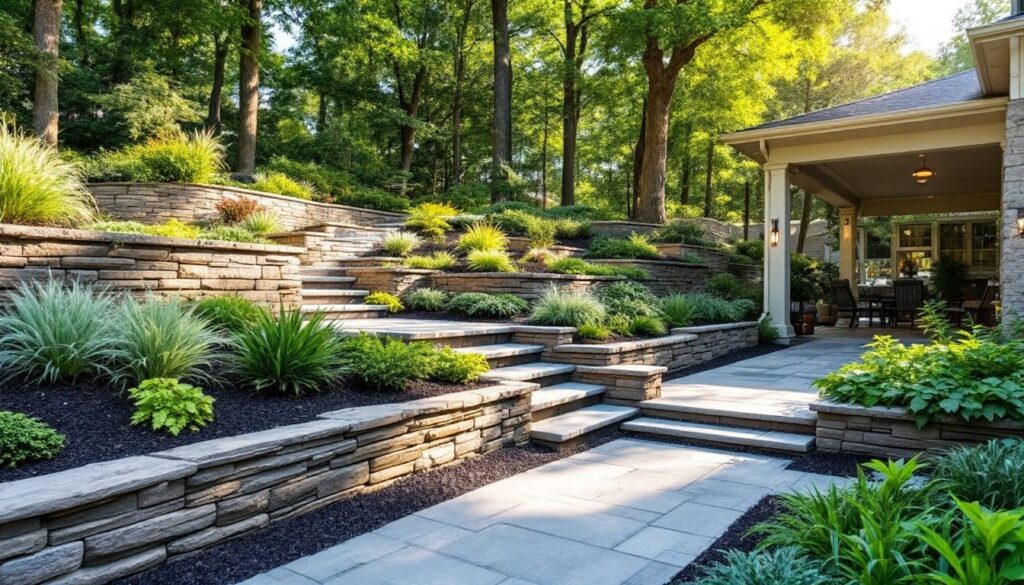
Stacked stone and natural fieldstone deliver timeless appeal. Dry-stacked (no mortar) stone walls feel rustic and allow water to drain freely. Mortared stone looks more formal and lasts longer, but requires better drainage behind the wall. Both require skilled installation: hire a pro if you’re working above 3 feet.
Segmental retaining wall blocks (SRWs) are engineered units, usually 1 foot × 2 feet, that stack simply and reliably. They’re cheaper than natural stone, come in multiple finishes and colors, and handle higher walls (up to 8 feet with proper base and drainage). Installation is DIY-friendly for walls under 3 feet: taller walls need engineer approval.
Timber (pressure-treated or cedar) offers a softer, modern look. Standard 4×12 or 6×12 timbers last 10 to 20 years, depending on ground contact and regional moisture. Timber walls suit shorter terraces (2 to 4 feet). They’re easier to install yourself but visually need a hand with proportions, awkward spacing or inconsistent finishing looks cheap.
Concrete is the budget option but offers the least personality unless you choose a textured or colored finish. Consider it for hidden back-of-property walls, not front-facing feature walls.
Regardless of material, proper drainage behind the wall is critical. Install 4 to 6 inches of gravel or drainage stone directly behind the wall face, topped with landscape fabric to prevent soil from clogging it. This allows water to percolate down and away, not pool behind the wall and create hydrostatic pressure. Water pressure is what topples walls.
For a budget approach to multiple terraces, Bricks for Landscaping provides creative tiering solutions using modular materials.
Hardscape and Pathway Integration
Terraced yards need clear circulation, pathways connecting terraces, transitions between levels, and steps that are both functional and beautiful.
Steps and stairs are the main vertical connector. Outdoor steps require a rise (vertical height) of 5 to 7 inches per step and a run (horizontal depth) of 10 to 12 inches, these dimensions feel natural and safe. Less depth or more rise creates a stumbling hazard. Material options include stone treads, pavers, poured concrete, or timber. For 3+ steps, the area generally requires a building permit and railings if drop-offs are present.
Pathways should be at least 3 feet wide for single-file traffic, 4 to 5 feet for two people side-by-side. Flagstone, pavers, mulch, or gravel all work. Avoid slick surfaces on slopes, textured stone or gritty mulch provides grip in wet weather. Slope pathways slightly (1/8 inch per foot) to shed water: standing water leads to icing in winter and mold in wet climates.
Landings are flat transition zones between levels. A 4 × 6 foot landing gives someone room to pause, catch their breath, or change direction. It’s also where you might place a bench, potted plants, or other features. Think of landings as small patios that break the climb and make the overall landscape feel intentional, not just functional.
Base preparation is critical. Compact the subgrade (the soil underneath) with a hand tamper or vibratory plate. Use 4 to 6 inches of crushed stone as a base layer, this ensures drainage and prevents settling. Crushed Granite Landscaping details how aggregate materials perform in different applications and climates.
Water Features and Drainage Solutions
Water management makes or breaks a terraced landscape. Terracing itself improves drainage by creating catch points, but you need to direct that water intentionally.
Surface drainage moves runoff across your terraces toward a collection point. Crown pathways and planting beds slightly (1/8 to 1/4 inch per foot of slope) so water doesn’t pond. Install shallow swales, gentle, vegetated channels, at the base of terraces or alongside pathways to channel water downslope. Plant swales with water-tolerant grasses or sedges: they filter and slow runoff while looking natural.
Subsurface drainage handles water behind retaining walls and in planting beds. As mentioned earlier, gravel backfill behind walls is essential. For planted terraces where water collects, consider a perforated drain line, 4-inch perforated PVC pipe laid in a gravel trench beneath planting beds, that directs excess water to daylight (ground surface) lower on the property or to a rain garden.
Rain gardens are planted depressions that capture roof runoff and surface water. They’re beautiful (planted with moisture-loving perennials and shrubs) and functional, filtering runoff before it seeps into groundwater. A 200-square-foot rain garden handles runoff from roughly 1,000 square feet of roof or paving.
Check local stormwater codes. Many municipalities require erosion control permits for landscapes with slopes over 25% or disturbance exceeding a certain acreage. If you’re adding French drains, rain gardens, or significantly re-grading, verify permit requirements with your local building department.
Water features like small fountains or streams can add life to terraced yards. A simple recirculating fountain with a submersible pump ($50 to $200) and basin works on any terrace and requires only an outlet. These provide visual interest, sound, and a focal point without complex plumbing.
Lighting Your Terraced Landscape
Lighting transforms a terraced yard from day-use to evening-use, and it highlights the tiers you’ve built.
Path lighting is functional and atmospheric. Low-voltage LED path lights (6 to 12 inches tall) line stairs and pathways, marking the route and creating ambient light without harsh shadows. Space them 4 to 6 feet apart. Low-voltage systems run off a transformer (plugged into a standard outlet), use minimal electricity, and are easy for DIYers to install, just bury the cable, click lights into place.
Accent lighting showcases plantings and hardscape features. Uplighting behind shrubs or across a textured retaining wall adds drama and depth. Spotlights mounted on upper terraces can graze downslope features. Use warm color temperatures (2700K or 3000K) for a welcoming feel: avoid cool whites, which feel institutional.
Stair and landing lighting ensures safety. Mount lights at the edge of steps (step-well lights recessed into risers work beautifully) or on handrails. Adequate illumination on stair treads prevents trips and falls. Aim for 10 to 20 foot-candles on active circulation areas, enough to see clearly without glare.
Uplighting on focal points, a specimen tree, water feature, or sculptural element, draws the eye and creates visual hierarchy. Place uplights at the base, angled up and away, to silhouette or graze the subject.
Use timers and smart controllers if desired, but keep the setup simple. Overlit yards feel harsh and lifeless. Aim for layered lighting: some bright zones (stairs, landings) and softer ambient zones (plantings, pathways). This creates visual interest and feels intentional.
For most residential projects, low-voltage LED systems are sufficient and energy-efficient. Standard 120-volt line-voltage systems offer more power but require trenching and buried conduit: hire a licensed electrician if you go this route.
Conclusion
Terraced landscaping transforms sloped yards into multi-level outdoor rooms that are safer, more beautiful, and infinitely more functional. Success depends on honest assessment of site challenges, proper drainage design, and thoughtful material and plant selection. Whether you’re tackling a modest two-tier garden or a dramatic multi-level transformation, start with site analysis and permits, invest in good drainage, and don’t rush grading and base preparation. Done right, your terraced backyard becomes a space that works for you, and adds lasting value to your home.