Table of Contents
ToggleA front yard doesn’t have to be a weekend time sink to look polished and inviting. The key is shifting from high-maintenance lawn culture to a smarter design strategy that works with nature instead of against it. Low-maintenance front yard landscaping isn’t about giving up on curb appeal, it’s about making strategic choices upfront so you’re not pulling weeds, mowing, or replanting every growing season. Whether you’re short on time, budget-conscious, or just tired of yard work, these seven approaches will help you create a front landscape that looks great with minimal upkeep.
Key Takeaways
- Native and drought-tolerant plants adapted to your region eliminate the need for excessive watering, fertilizer, and pest management, saving time and resources after the first season.
- Installing hardscaping elements like permeable pavers, pathways, and landscape edging replaces high-maintenance turf with durable structures that reduce mowing, weeding, and ongoing upkeep.
- A 2-to-3-inch mulch layer cuts watering frequency by 25-50% and suppresses weeds, making it one of the highest-return investments for low-maintenance front yard landscaping.
- Simplifying your design to three to five anchor plants with cohesive groupings eliminates complexity and makes maintenance tasks like fertilizing and pruning far more manageable.
- Automating irrigation with drip systems and smart timers delivers water directly to plant roots, cutting waste by 30-50% while ensuring consistent moisture without daily effort.
- Ground covers and low-growing plants shade out weeds naturally and require minimal pruning compared to traditional lawns, transforming your front yard into a resilient, attractive space.
Choose Native Plants and Drought-Tolerant Species
Native plants are your secret weapon for low-maintenance landscaping. They’re adapted to your region’s climate and soil, meaning they need less water, fertilizer, and pest management once established. A native plant thrives in local conditions because it evolved there, simple as that.
Start by identifying what grows naturally in your area. Check with your local extension office or native plant society for species lists. In the Southwest, think desert marigold and Apache plume. In the Southeast, black-eyed Susans and coreopsis work beautifully. The Pacific Northwest loves sedums and ornamental grasses. These plants establish quickly, rarely need pruning, and handle regional pests without fussy treatments.
Drought-tolerant doesn’t mean dull. Russian sage offers feathery foliage and purple blooms. Salvia brings color without drama. Ornamental grasses like fountain grass add movement and texture year-round. Mix in a few complementary non-natives if you want, just prioritize species that match your climate’s natural water availability.
The real payoff? After the first year, native plants rarely need supplemental watering, even in dry seasons. No dragging hoses, no guilt about wasting water. They’re also naturally resistant to local pests, so you skip the chemical treatments.
Install Hardscaping Elements to Reduce Maintenance
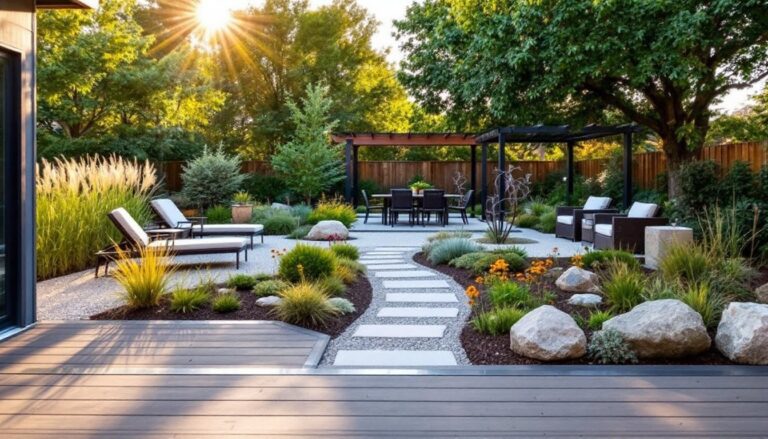
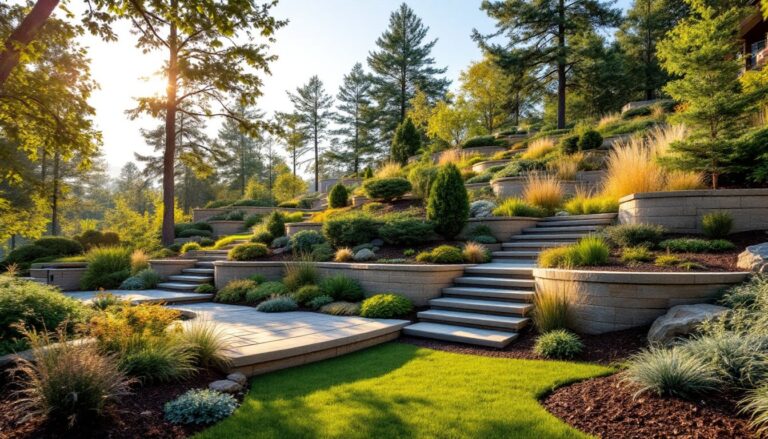
Hardscaping, patios, pathways, retaining walls, and edging, replaces turf and planting beds with low-care structures. Every square foot of hardscape is a square foot you don’t have to mow, weed, or water.
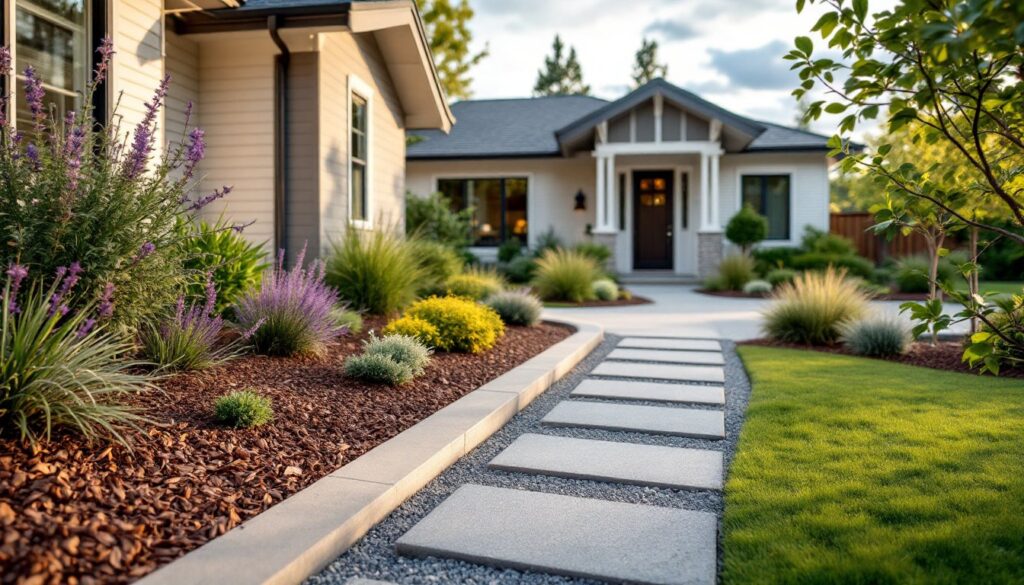
Start with a simple front entry path. Permeable pavers or stepping stones define circulation, add visual interest, and eliminate grass wear patterns. A 3-by-6-foot patio at your front door creates a gathering spot and cuts maintenance zones. If budget allows, a small raised seating area or decomposed granite-filled sitting zone extends usability without demanding upkeep.
Edging matters too. Installing a steel or plastic landscape border between beds and turf stops grass from creeping into planting areas and prevents the constant edge-trimming that eats into weekend time. A 2-to-3-inch raised curb around beds also makes mowing cleaner and faster.
Cost varies by material and complexity. Pavers run $4–$12 per square foot installed: gravel or decomposed granite costs $1–$3 per square foot. Edging runs $1–$4 per linear foot. The investment pays back in reduced labor, faster mowing, and fewer weeds creeping into planting zones. Crushed granite landscaping offers durability and style if you’re looking for material-specific guidance.
Mulch Beds to Suppress Weeds and Retain Moisture
Mulch is the most cost-effective tool for cutting maintenance in half. A 2-to-3-inch layer of quality mulch suppresses weeds, retains soil moisture, regulates soil temperature, and improves soil structure as it breaks down. Without it, weeds sprint and you’re constantly fighting moisture loss in hot months.
Choose the right mulch type for your climate and aesthetic. Wood chips (shredded bark or hardwood) are affordable ($30–$60 per cubic yard) and break down slowly, feeding soil as they age. Avoid dyed mulch, the artificial colors fade, and chemicals aren’t necessary. Pine needles work well in acidic soils and resist compaction. Shredded hardwood lasts longer than softwood chips and looks more finished.
Application is straightforward: clear existing weeds, lay down landscape fabric (optional but recommended under new beds), and spread mulch evenly. Keep mulch 4–6 inches away from tree trunks to prevent rot and pest harboring. Refresh mulch annually by topping with a fresh 1-inch layer, it compacts and decomposes over time.
Proper mulching cuts watering frequency by 25–50%, depending on climate. Fewer weeds means less weeding. It’s one of the highest-return investments in low-maintenance landscaping. A 100-square-foot bed needs roughly 3 cubic yards of mulch initially, manageable for a weekend DIY project or affordable to hire out.
Simplify Your Design With a Minimalist Landscape Layout
Complexity breeds maintenance. A front yard with seven plant types, a lawn, flower borders, and a water feature demands constant tweaking. Simplicity is intentional design, fewer plant varieties, clear zones, and a cohesive vision.
Start by identifying your three to five “anchor plants”, the structural backbone of the landscape. These might be a small ornamental tree, a trio of large shrubs, and a sweeping groundcover. Every other plant should complement or repeat these anchors, creating rhythm without clutter. Grouping identical plants (three ornamental grasses, five sedums) looks cleaner and is easier to maintain than scattered specimen plants.
Reduce turf area. Does your front lawn actually get used, or is it just a green rectangle? Consider removing half or all of it and replacing it with hardscape and planted beds. A zero-lawn front yard isn’t trendy, it’s practical. Landscaping ideas for front yards often showcase strategies for shrinking lawn footprints while maintaining curb appeal.
Limit plant variety. The industry’s “thriller, filler, spiller” container principle, a tall focal plant, mid-height filler, and trailing groundcover, works at landscape scale too. Repeat this pattern in your beds, and complexity feels intentional rather than chaotic. Fewer plant types also means fewer fertilizer schedules, pest profiles, and pruning habits to track.
Automate Watering With Smart Irrigation Systems
Hand-watering is time-consuming and inconsistent. Drip irrigation systems and smart timers transform watering from a chore into an automated process that’s more efficient and better for plants.
Drip irrigation delivers water directly to soil at plant roots, not foliage, cutting water waste by 30–50% compared to sprinklers. A simple DIY drip kit (soaker hose or drip tubing with emitters) costs $40–$150 for a small front bed and takes an hour to install. Water runs on a timer (plug-in or Wi-Fi-enabled) so you set it and forget it. Plants get consistent moisture without your daily involvement.
Smart irrigation controllers learn your climate, adjust for rainfall, and shut off automatically if it rains. Systems like Rachio or Hunter Hydrawise pair with your hose or in-ground system and manage zones through an app. For a small front yard, a basic Wi-Fi timer (starting at $50–$100) gives you scheduling control from anywhere.
The setup is straightforward for DIYers. Bury soaker hose 2–4 inches deep under mulch, connect it to an outdoor faucet with a timer, and run it on a schedule matching your plants’ needs, typically deep watering 1–2 times weekly in summer, less in spring and fall. Native and drought-tolerant plants need less frequent watering once rooted, often thriving on rainfall alone after the first season.
Use Ground Covers and Low-Growing Plants
Ground covers and low-growing plants eliminate the mowing problem while filling space without fussy perennials. A 1-to-2-foot-tall landscape looks intentional, requires minimal pruning, and shades out weeds naturally.
Choose tough ground covers suited to your region. Sedum (stonecrop) handles drought and poor soil, just give it decent drainage. Creeping thyme brings fragrance and blooms with foot traffic tolerance. Vinca (periwinkle) fills shaded areas quickly. Ornamental grasses like blue fescue or fountain grass add height and movement without demanding pruning. In warmer zones, ajuga (bugleweed) spreads rapidly and blooms purple-blue.
The advantage is density. A mature ground cover crowd eliminates space for weeds and reduces water loss through exposed soil. Plant at 12-to-18-inch spacing depending on species, close spacing fills faster, cutting your weeding timeline. Space wider if budget is tight: the planting will fill within a season or two.
Pairing ground covers with small front yard landscaping ideas maximizes tiny footprints. A 100-square-foot bed of sedum or ornamental grass needs maybe three cleanup passes yearly instead of weekly mowing and weeding. Most ground covers also tolerate heat, deer browse, and foot traffic better than traditional lawns, real resilience.
Conclusion
Low-maintenance front yard landscaping is about making smart design and plant choices upfront so the landscape works for you, not the other way around. Native plants, hardscaping, mulch, automation, and simplicity compound, each choice reduces the next maintenance task. The result is a front yard that draws compliments and takes hours per year instead of hours per week. Start with one or two strategies, add more as you refine your vision, and you’ll quickly land on a landscape that fits your life.