Table of Contents
ToggleA concrete patio is the workhorse of outdoor living, durable, practical, and low-maintenance. But left bare, it can feel cold and uninviting, like a parking lot instead of a place to linger. The good news: concrete patio landscaping ideas don’t require ripping it out or very costly. Strategic planting, thoughtful hardscaping, and smart design choices turn that slab into a genuine outdoor room. Whether you’re working with a small urban patio or a sprawling backyard foundation, these seven approaches show how layering greenery, shade, lighting, and texture creates warmth and visual interest, while keeping installation realistic for DIYers.
Key Takeaways
- Concrete patio landscaping ideas transform a bare slab into an inviting outdoor room by layering greenery, shade, and lighting without requiring expensive reconstruction.
- Raised planter beds and container gardens offer flexible, low-maintenance ways to add structure and softness around your concrete patio perimeter.
- Vertical gardens and climbing plants maximize space and provide privacy by using trellises or living wall systems that require minimal ongoing care.
- Shade from pergolas, trees, or retractable umbrellas significantly improves livability, with pergolas costing $800–$2,500 for a basic DIY structure.
- Softening hard concrete edges with grass borders, moss, or narrow planting pockets creates visual depth and prevents the patio from feeling like a parking lot.
- Strategic outdoor lighting with layered ambient, task, and accent lights extends your patio’s usability into evening hours and enhances the overall atmosphere.
Planter Beds and Container Gardens Around Your Concrete Patio
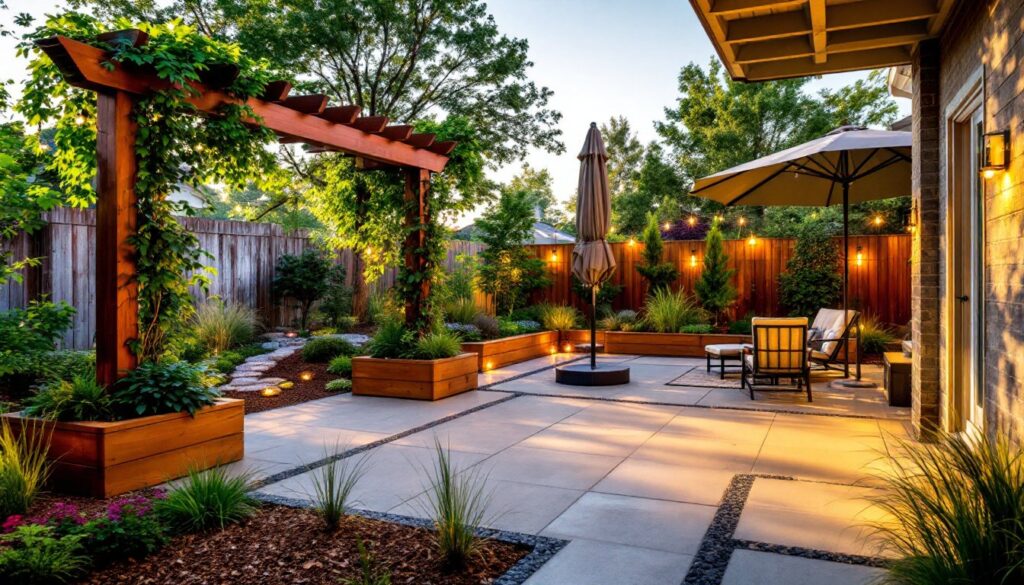
Planter beds are your easiest win. Building a raised bed around the patio perimeter adds instant structure and softness without touching the concrete itself. Use pressure-treated lumber (2×8 or 2×10 boards work well) and stake it down with 4×4 posts driven at least 12 inches into the ground for stability. Line the bottom with landscape fabric to suppress weeds, then fill with a quality soil mix, roughly 60% topsoil, 30% compost, and 10% perlite for drainage.
Container gardens offer flexibility if you’re renting or like to rearrange. Large resin or fibreglass pots (18–24 inches diameter) hold substantial root systems and won’t crack in freeze-thaw cycles like ceramic can. Fill them with the same soil blend, and space them strategically, clustering three or five pots creates visual rhythm better than scattering singles. Dwarf conifers, ornamental grasses, and seasonal flowers all thrive in containers. Water containers more frequently than in-ground beds, especially in warm weather: the soil dries faster. For year-round interest, crushed granite landscaping options work beautifully as mulch around container bases.
Vertical Garden Walls and Climbing Plants for Height and Privacy
Vertical gardens turn a blank fence or wall into a living backdrop. Trellis systems, either DIY wooden frames or pre-made metal grids, give climbing plants something to grab. Clematis, climbing hydrangea, and jasmine grow fast and add texture without consuming floor space. Attach a sturdy trellis to the fence using lag bolts every 16 inches: check that the fence itself is load-bearing (if it’s a vinyl privacy fence, confirm it can handle the weight before installing).
For faster results, consider a living wall planter system with small pockets or horizontal shelves. These modular kits mount to wood or metal and hold shallow-rooted plants, sedums, ornamental grasses, and low-water succulents thrive here. Water drips down from the top, so the system is more water-efficient than it looks. A 4×8 living wall requires roughly 20–40 plants depending on pocket spacing. Installation takes a weekend: ongoing care is minimal once plants establish. Green walls reduce heat reflection off concrete and add insulation value to your patio micro-climate.
Decorative Mulch, Stone, and Ground Cover Options
Mulch isn’t just functional, it’s a design element. Bark mulch adds warmth and visual softness around plants: shredded cedar or pine retains moisture and smells pleasant. Spread it 2–3 inches deep, keeping it 3 inches away from tree trunks to prevent rot. Decorative stone options include river rock (smooth, rounded, various colors), pea gravel (loose and easy to walk on), or crushed granite landscaping (compacts firmly and looks polished).
Ground covers fill gaps without requiring maintenance like lawn. Creeping thyme, sedum, and moss thrive in partial shade and poor soil, perfect for the edges where concrete casts shadows. Space plants 12 inches apart and water regularly during the first month while roots establish. For a more substantial look, bricks for landscaping create pathways and defined planting zones within mulched beds, guiding foot traffic and preventing soil compaction. Mix materials, bark in plant beds, stone beneath seating areas, brick borders, to keep the eye moving.
Shade Solutions: Trees, Pergolas, and Umbrellas
Shade transforms how livable a patio feels, especially in hot climates. Deciduous trees (oak, maple, crabapple) mature in 5–10 years and provide summer cooling while allowing winter sun through. Plant them at least 15 feet from the patio edge to avoid roots undermining the concrete and keep limbs clear of overhead lines. Coniferous trees (arborvitae, dwarf spruce) provide year-round screening without deciduous shedding.
For immediate shade, a pergola does double duty: it reduces sun intensity without blocking airflow like a solid roof, and climbing vines add plant interest. A 12×12 pergola bolted to concrete pads typically costs $800–$2,500 in materials for a basic wooden structure (pressure-treated 4×8 beams and 2×6 joists). DIY assembly is feasible if you’re comfortable with a drill and level: use concrete footings at least 12 inches deep to prevent frost heave. Retractable umbrellas offer flexibility and cost less upfront ($200–$600), ideal if you’re testing layouts before committing to permanent structures. Modern backyard landscaping ideas often blend pergolas with climbing vines and strategic umbrella placement for layered shade control.
Softening Concrete Edges With Grass, Moss, and Groundcover
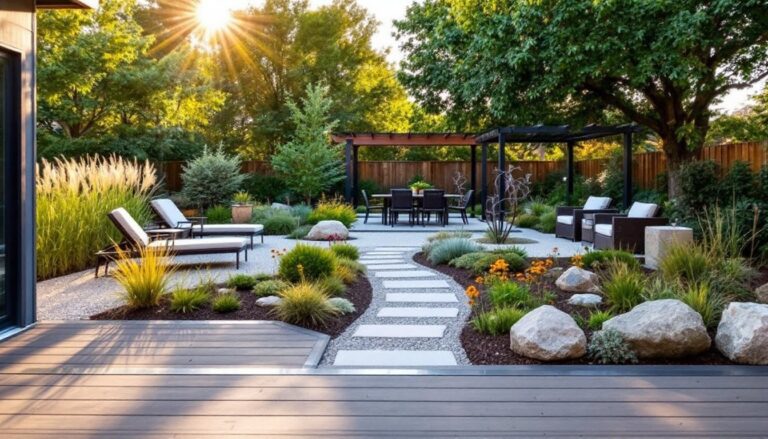
Hard edges are the concrete patio’s worst enemy aesthetically. Soften them by running a strip of lawn or groundcover along the perimeter. A 2–3 foot grass border (regular turf or ornamental grass like feather reed grass) breaks up the visual mass and creates breathing room. Sod establishes fastest: seed is cheaper but takes weeks. Edge the grass with a metal or plastic border strip to keep it from creeping onto the patio and to define the line crisply.
In shade or poor-drainage areas, moss works beautifully and requires almost no maintenance. Moss prefers acidic, moist soil, if your soil is alkaline, work in sulfur or peat moss to lower the pH. Established moss survives neglect and fills in cracks where grass won’t grow. For urban patios where space is tight, even 6-inch-wide planting pockets along the edges, filled with creeping jenny, corsican mint, or sedum, soften the look dramatically. The key is breaking up that hard line where concrete meets surroundings.
Outdoor Lighting and Ambient Elements
Lighting extends patio life into evening hours and adds ambiance. String lights (bistro or fairy lights) create a warm, informal atmosphere: wire them overhead between posts or a pergola frame. Solar-powered LED strings run $30–$60 and need no wiring, perfect for renters. Hardwired systems cost more but are reliable and dimmer-compatible. Always follow NEC (National Electrical Code) guidelines: any outdoor outlets must be GFCI-protected, and low-voltage landscape lighting should be buried at least 18 inches deep if it crosses walkways.
Floor-level path lights along planting beds or the patio edge improve safety and guide movement. Warm white LEDs (2700K color temperature) feel cozier than cool white. Uplighting on trees or a water feature adds drama. For southern living style patios, string lights wrapped around mature trees or draped from pergolas create that classic porch-party aesthetic. Layer your lighting: ambient overhead, task lighting for dining or reading, and accent lights on plants or hardscape. Dimmers let you adjust mood throughout the evening.
Conclusion
Transforming a bare concrete patio doesn’t mean expensive reconstruction. By layering planter beds, vertical gardens, strategic shade, soft ground covers, and thoughtful lighting, you create an outdoor room that feels finished and inviting. Start with one or two ideas, perhaps a raised bed and some containers, then build from there. Your landscape will evolve as plants mature and your needs shift. The concrete stays put, doing its job reliably, while the living elements around it do the heavy lifting on warmth and character.