Table of Contents
ToggleYour home’s front yard is the first thing guests see, and the last thing they notice when driving past. A well-planned landscape doesn’t just look good: it signals pride in ownership and boosts your property’s value. The good news: you don’t need a landscape architect or a bloated budget to make a real difference. Whether you’re working with a sprawling suburban lot or a tight city townhouse, curb appeal landscaping ideas range from simple soil refreshes to strategic hardscaping upgrades. This guide walks you through 15 practical, tested approaches to transform your home’s entrance into a memorable, inviting space that reflects your style and withstands the seasons.
Key Takeaways
- Start curb appeal landscaping ideas with a healthy lawn foundation by testing soil, aerating compacted areas, and seeding strategically—a strong grass base amplifies the impact of all other design elements.
- Layer plants in zones with anchoring shrubs near the foundation, mid-layer perennials for year-round color, and seasonal annuals for budget-friendly refreshes that cost as little as $2 in seeds.
- Hardscaping like pathways, edging, and accent features provides essential structure; even modest updates deliver disproportionate visual impact when placed with intention and aligned with your home’s architecture.
- Transform your front door into a focal point with fresh paint, flanking potted plants, upgraded hardware, and warm-toned lighting (2700K) that signals welcome and ties the entire composition together.
- Landscape lighting and fresh mulch in spring deliver immediate, visible curb appeal—place low-voltage lights every 3–4 feet along walkways and refresh dark mulch annually for maximum visual pop.
- Maintain regional design consistency by researching your neighborhood’s landscape personality so your front yard feels intentional and curated, not like an imported style.
Front Lawn Foundation: Creating a Healthy, Vibrant Grass Base
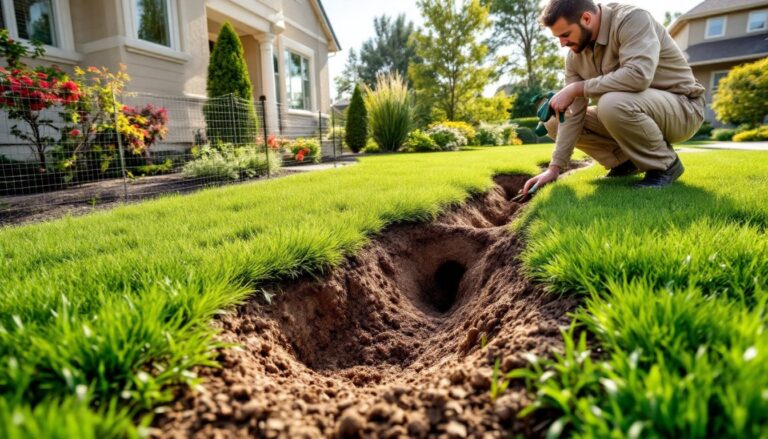
Before adding plants or hardscape features, the lawn itself needs attention. A patchy, thin yard undermines everything else you do, so start here. Healthy grass begins with understanding your soil. A simple soil test (available through your county extension office for under $20) reveals pH, nutrient levels, and drainage issues. Most residential lawns prefer a pH between 6.0 and 7.0: adjust with lime or sulfur if needed.
Aeration is non-negotiable if your grass gets foot traffic or sits on compacted clay. Rent a core aerator (around $75–$150 per day) and run it once in fall or early spring, when grass is actively growing. Overseed immediately after aeration so seeds settle into the holes. Use seed matched to your region and sunlight conditions, shade-tolerant mixes exist for north-facing yards.
Mowing height matters more than people think. Keep cool-season grasses (fescue, bluegrass, ryegrass) at 2.5 to 3.5 inches: warm-season varieties (Bermuda, zoysia) at 1.5 to 2.5 inches. Taller grass shades soil, reduces weeds, and survives drought better. Edge the lawn border with a spade or powered edger in spring and late summer, clean lines instantly elevate curb appeal. If your lawn is beyond repair, consider alternatives: clover lawns, native grass meadows, or xeriscaping with hardscape and plants cut water use by half.
Strategic Plant Placement and Seasonal Color Schemes
Once your turf foundation is solid, layered planting creates visual depth and year-round interest. Think in zones: anchoring shrubs near the foundation, mid-layer perennials for texture, and seasonal annuals for pop. Plant shrubs 18–36 inches from the foundation (not tight against it) to allow air circulation and prevent rot.
For north-facing yards, reach for shade-tolerant shrubs like boxwood, arborvitae, or hydrangea. South and west exposures handle sun-loving options: spireas, junipers, and butterfly bush. Avoid overgrown specimens: a mature shrub planted at its eventual size looks sparse at first but prevents future pruning headaches.
Layering Perennials and Annuals for Year-Round Interest
Perennials come back yearly and establish root systems that improve soil structure. Plant them in drifts of three or five (odd numbers feel more natural) spaced to their mature width. Fall bloomers like sedum and asters extend color into November. Spring bloomers, tulips, daffodils, and hellebores, wake up the yard early. Summer workhorses include coreopsis, rudbeckia (black-eyed Susan), and salvia.
Annuals are your seasonal refresh button. Plant them in May (after last frost in most regions) for non-stop blooms until frost. Marigolds and zinnias are bulletproof, heat-loving choices: impatiens and begonias work in shade. Budget-conscious DIYers grow annuals from seed indoors 6–8 weeks before the last frost date, roughly $2 in seed yields $30+ in transplants.
Mulch planting beds to 2–3 inches with shredded bark or compost. This suppresses weeds, retains moisture, and moderates soil temperature. Leave 6 inches clear around shrub stems to prevent rot. Refresh mulch annually in spring, as it breaks down and compacts.
Hardscaping Elements That Add Structure and Visual Impact
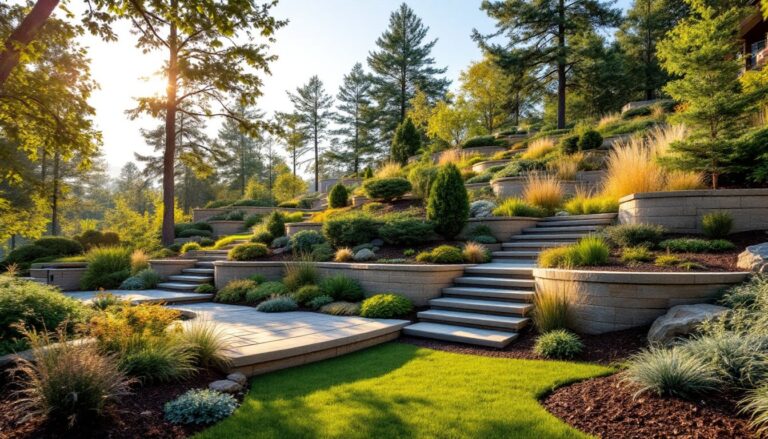
Hardscape, patios, pathways, retaining walls, and edging, provides the skeleton of landscape design. Strategic hardscaping directs foot traffic, frames plantings, and creates visual anchor points. Stone, brick, and composite materials age differently: choose what matches your home’s architecture and your maintenance tolerance.
Brick and natural stone are timeless. Lay them in sand (not concrete, which cracks as ground shifts) over a 3–4 inch gravel base for longevity. A 4-foot-wide pathway feels generous without eating the whole yard. Composite materials like permeable pavers and recycled plastic boards cost more upfront but resist rot and minimize weeds. According to budget-conscious homeowners, even modest hardscape updates deliver disproportionate curb appeal gains.
Pathways, Borders, and Accent Features
A front walk from driveway or street to door shouldn’t meander: straight or gentle curves feel intentional. Standard width is 3–4 feet (wide enough for two people abreast). Raised beds, bordered planting areas, or low steel or composite edging crisp up beds and prevent grass creep.
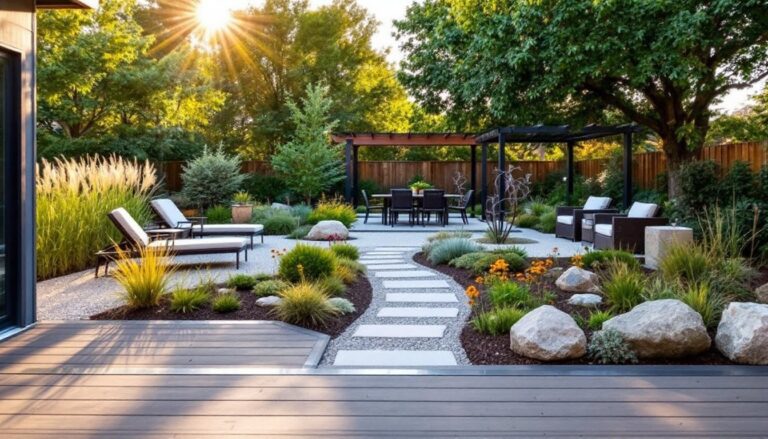
Accent features, a small water feature, sculpture, or grouped boulders, draw the eye and create character without very costly. Modern landscaping approaches emphasize simplicity and purposeful placement over clutter. A single large boulder or urn looks more curated than a scatter of ornaments. Consider sight lines from the street: what catches the eye at sidewalk level matters most.
Entryway Upgrades: Making a Bold Statement at Your Door
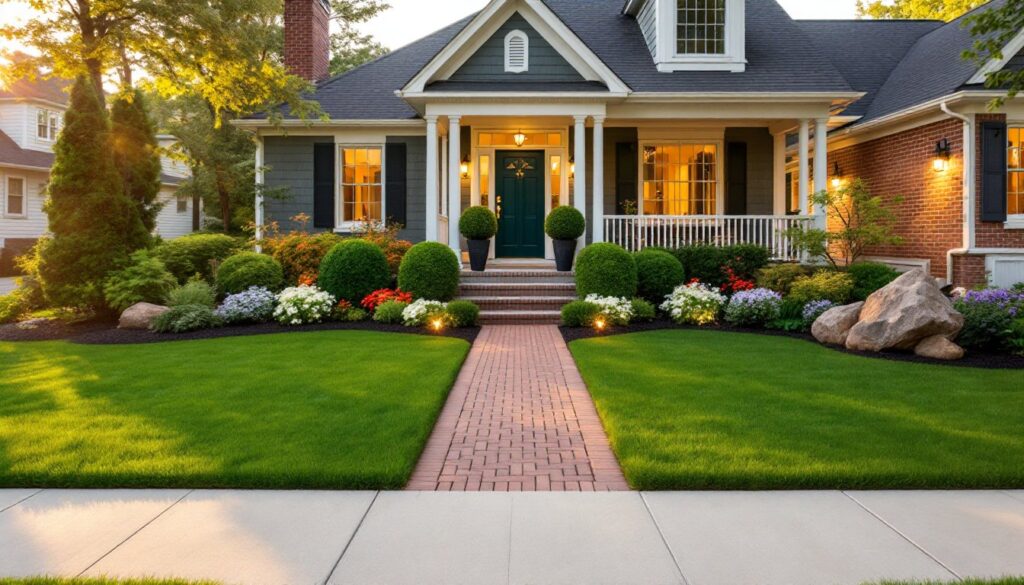
Your front door is the focal point of the entire composition. Fresh paint in a bold color (deep green, navy, or charcoal) instantly updates any home. Flanking the door with matching potted plants, mums, boxwood topiary, or ornamental grasses, creates symmetry and formality. Swap seasonal containers quarterly for fresh curb impact.
Upgrade hardware if the door is dated: new hinges, a substantial door handle, and house numbers cost under $100 but read as an expensive refresh. A covered porch or stoop telegraphs welcome: even a simple awning or gable adds shelter and visual interest. If you have one, clean or stain the porch floor and remove clutter.
Lighting at the entry serves function and beauty. Fixtures flanking the door or integrated into post caps illuminate the threshold at night and read as intentional detail. Solar post caps ($15–$40 per pair) work fine for accent lighting: hardwired sconces ($80–$250) look more finished. Ensure lights warm visitors with 2700K color temperature, not sterile 4000K.
Why the entry focus? It’s where all the other landscaping converges visually. A rambling garden with weak entry feels unfinished. A modest yard with a strong, well-lit door anchors the whole composition.
Lighting, Mulch, and Finishing Touches That Elevate Everything
Nighttime curb appeal matters. Landscape lighting defines pathways, spotlights specimen plants, and transforms the front yard into a welcoming space after dark. Low-voltage solar or LED path lights ($10–$30 each) line walkways: place one every 3–4 feet for safe footing without harsh brightness. Uplighting on a tree or textured shrub adds drama. Avoid overlighting, too many fixtures look like a parking lot.
Multch ties everything together aesthetically. Dark mulches (charcoal, dark bark) recede and make plantings pop: tan or cedar mulch reads warmer but fades over time. Shredded bark or nuggets are fine: avoid dyed red mulch (which telegraphs “managed landscape”) unless it matches your design intent. Fresh mulch in spring is a $200–$500 investment for most properties but delivers visible impact in a single day.
Final touches: clean hardscape and edging annually. Power-wash a patio or walkway annually (use moderate pressure, high pressure damages soft stone) to remove algae and dirt. Edge lawn borders weekly during growing season. Trim shrubs to clean shape, not buzzed flat, but structured. Deadhead spent flowers on annuals to extend blooms. Rake fallen leaves promptly in fall to keep the yard looking tended.
Consider regional design cues. Southern regions celebrate covered porches and flowering trees, while western landscapes lean toward drought-tolerant natives and open sight lines. Research what’s already on your street and your neighborhood’s personality. Your landscaping should feel like it belongs, not like you imported an entirely different style. A thoughtful front yard doesn’t shout for attention, it invites it. Start with your lawn, layer in plants and hardscape, and refine with lighting and finish details. In 4–6 weeks, you’ll see results.